Introduction: The City That Liberates the Dead
Gayā — one of the most ancient and sacred cities in India — sits on the banks of the Phalgū river in the Magadha region of modern Bihar, approximately 100 kilometres south of Patna. Unlike most Hindu tīrthas, which are primarily associated with the worship of a particular deity, Gayā’s defining sacred function is piṇḍadāna — the offering of rice balls (piṇḍa) to deceased ancestors for the peace and liberation of their souls. The city is, above all else, the tīrtha of the pitṛs (ancestors), the place where the living discharge their most solemn duty to the dead.
The Vāyu Purāṇa dedicates an extensive section — the Gayā Māhātmya (chapters 105-112) — to the glories of this tīrtha, declaring: “There is no place on earth equal to Gayā for the performance of śrāddha (ancestral rites). He who offers piṇḍa at Gayā liberates seven generations of ancestors and seven generations of descendants” (Vāyu Purāṇa 105.8-9). This promise of liberating power — extending both backward and forward through the family line — has made Gayā the most sought-after destination for Hindus performing funeral and commemorative rites for millennia.
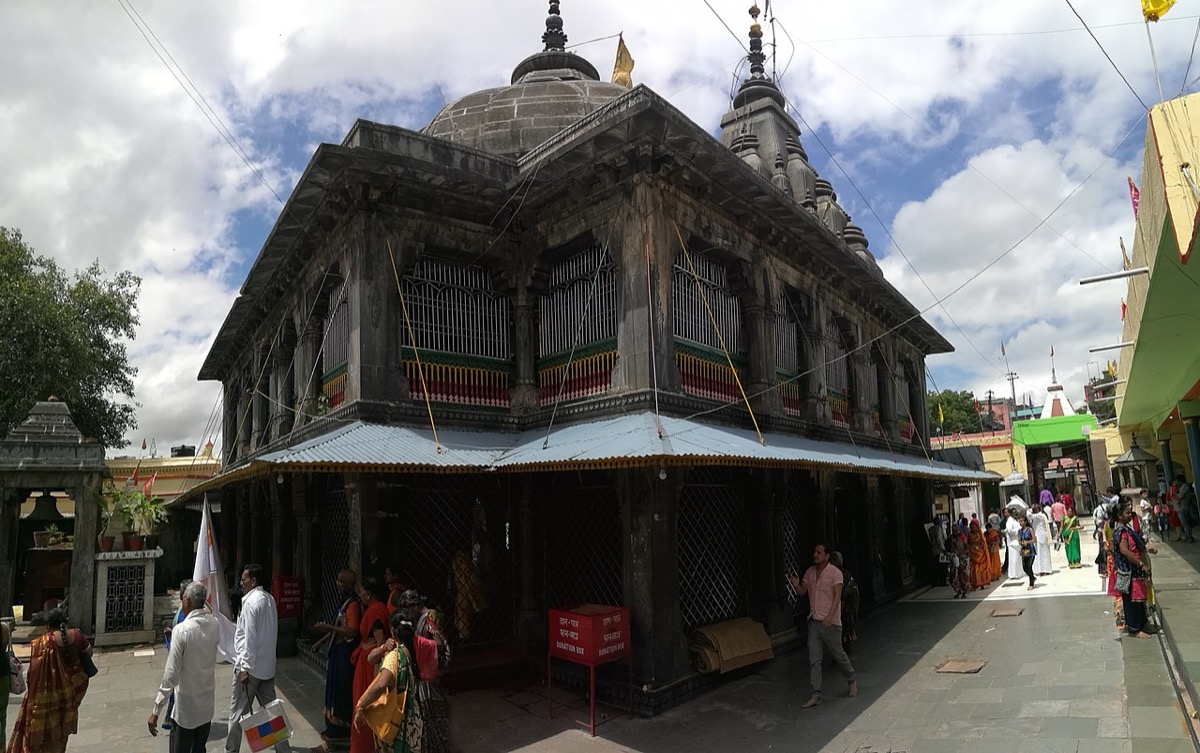
At the centre of this sacred geography stands the Viṣṇupad Temple, which enshrines a footprint of Lord Viṣṇu impressed in solid rock — a physical mark of the divine presence that anchors the entire ritual landscape of Gayā.
Mythology and Legends
The Story of Gayāsura
The foundational myth of Gayā, narrated at length in the Vāyu Purāṇa (Gayā Māhātmya, chapters 105-106) and the Padma Purāṇa, tells of a great demon (asura) named Gayāsura. Unlike most asuras, Gayāsura was not malevolent but extraordinarily pious. He performed tapas (austerity) of such intensity that anyone who merely touched his body was immediately liberated from the cycle of saṃsāra — regardless of their karma.
This created a theological crisis: Yama, the god of death, found his kingdom emptying. The gods approached Brahmā, who in turn appealed to Viṣṇu. Viṣṇu asked Gayāsura to lie down and offered his body as the surface upon which the gods would perform a grand yajña (sacrifice). Gayāsura, ever devoted, agreed. As the sacrifice proceeded, Viṣṇu placed his foot upon the demon’s chest to hold him in place, and the impression of Viṣṇu’s foot was imprinted forever into the rock.
As Gayāsura’s body became the sacred geography of Gayā, Viṣṇu granted him a boon: “Your body shall become the most sacred tīrtha on earth for the liberation of ancestors. Whoever performs piṇḍadāna upon your body shall liberate their forebears” (Vāyu Purāṇa 106.38-40). The demon’s head became the Gayā Śīrṣa (the hill at the centre of the city), and his body extended across the entire sacred zone — a roughly 5-kilometre area encompassing the 45 traditional piṇḍadāna sites (vedīs).
Rāma’s Piṇḍadāna for Daśaratha
The Rāmāyaṇa tradition records one of the most emotionally powerful episodes in the entire epic in connection with Gayā. During their period of exile, Rāma, Sītā, and Lakṣmaṇa visited Gayā to perform piṇḍadāna for Rāma’s deceased father, King Daśaratha. According to the Padma Purāṇa and regional traditions, when Rāma went to the river to collect materials for the ritual, the appointed time (muhūrta) began to pass.
Sītā, anxious that the auspicious moment would be lost, performed the piṇḍadāna herself in Rāma’s absence. The Phalgū river, the Akṣayavaṭa (banyan tree), the cow, and a Brāhmaṇa served as witnesses to her offering. When Rāma returned and questioned what had happened, these witnesses initially denied seeing anything — and Sītā cursed them. She cursed the Phalgū to flow underground (which is why the river appears dry on the surface at Gayā for much of the year, flowing beneath the sand), the cow to have an impure mouth (though its tail end remained pure), and the Brāhmaṇa to remain perpetually unsatisfied. However, she blessed the Akṣayavaṭa to remain immortal.
This legend explains several distinctive features of Gayā’s sacred geography and ritual practice and connects the city to the most beloved figures of the Rāmāyaṇa.
The Viṣṇupad Temple
Architecture and History
The Viṣṇupad Temple (Viṣṇu-pada, “the foot of Viṣṇu”), the most important shrine in Gayā, was rebuilt in its present form in 1787 CE by Maharani Ahalyā Bāī Holkar of Indore, one of the most remarkable temple-building queens in Indian history. Ahalyā Bāī, who was responsible for the reconstruction of numerous temples across India (including the Kāśī Viśvanātha Temple at Varanasi), commissioned the current structure in the Nāgara style.
The temple rises to approximately 30 metres (100 feet), with a towering octagonal śikhara (tower) crowned with a gold-plated kalaśa (finial). The building is constructed of large grey granite blocks. Inside the garbhagṛha (sanctum), the sacred footprint of Viṣṇu — approximately 40 centimetres (16 inches) in length — is imprinted on a block of basalt rock. The footprint is adorned with a silver basin and is the focus of daily worship and the piṇḍadāna rituals.
The temple complex includes a large courtyard with a banyan tree (Akṣayavaṭa), an assembly hall for pilgrims performing śrāddha, and several subsidiary shrines. The temple’s eight pillars in the inner sanctum are said to represent the eight directions, and the octagonal tower symbolizes Viṣṇu’s all-pervading presence.
The Sacred Footprint
The Viṣṇu-pada (footprint) itself is the central object of veneration. Hindu theology holds that the footprint was impressed when Viṣṇu placed his foot upon Gayāsura, and it serves as a permanent mark of the divine upon the earth. Pilgrims performing piṇḍadāna place their offerings directly at the footprint, believing that Viṣṇu’s continued presence sanctifies the offering and ensures its transmission to the ancestors.
The Garuḍa Purāṇa (Pretakhaṇḍa X.43) instructs: “The piṇḍa offered at the Viṣṇupad in Gayā reaches the ancestors directly, as if placed in their own hands.” This direct transmission — bypassing the need for intermediary deities or extended rituals — is what makes the Viṣṇupad offering uniquely powerful.
The Phalgū River
The Phalgū river (also called Niraṇjanā in Buddhist texts, as it flows past Bodh Gayā) is one of the most unusual sacred rivers in India. For much of the year, the river appears dry on the surface, with water flowing beneath the sand — a phenomenon that the Rāmāyaṇa tradition attributes to Sītā’s curse. Despite this apparent dryness, the river is ritually present and fully sacred: pilgrims dig small pits in the sand to reach the subsurface water for their ablutions and offerings.
The Vāyu Purāṇa declares the Phalgū among the most sacred rivers for pitṛ-tarpaṇa (offerings to ancestors): “The waters of the Phalgū are sanctified by Viṣṇu’s touch and carry the offerings of the living directly to the realm of the pitṛs” (Vāyu Purāṇa 107.15). The river’s underground flow is itself rich in symbolism: just as the water flows hidden beneath the surface, so the connection between the living and the dead persists, invisible but ever-present.
The Forty-Five Vedīs and the Piṇḍadāna Circuit
The Ritual Geography
The traditional piṇḍadāna at Gayā involves performing offerings at multiple sacred sites (vedīs) across the city over a period of seven to seventeen days. The Vāyu Purāṇa and the Gayā Māhātmya enumerate 45 such sites, though modern practice typically consolidates the circuit. The major vedīs include:
- Viṣṇupad — the primary offering site at the sacred footprint
- Akṣayavaṭa — the “imperishable banyan tree,” where Sītā performed her offering
- Phalgū Tīrtha — the riverbank offering sites
- Pretaśilā — the “Rock of the Dead,” a hilltop from which piṇḍas are offered with a view of the entire sacred zone
- Rāmakuṇḍa — the pool associated with Rāma’s visit
- Brahma Kuṇḍa — associated with Brahmā’s role in the Gayāsura narrative
- Gayā Śīrṣa — the head of Gayāsura, the hill at the centre of the city
The Piṇḍadāna Ritual
The piṇḍadāna ritual is the heart of the Gayā pilgrimage. Piṇḍas — balls made of cooked rice, barley flour, sesame seeds, and honey — are offered by the yajamāna (the person performing the rite, typically the eldest son of the deceased) while reciting mantras invoking the ancestors by name. The Garuḍa Purāṇa (Pretakhaṇḍa X-XI) provides detailed instructions:
- The pilgrim first bathes in the Phalgū and performs saṅkalpa (sacred resolution)
- The piṇḍas are prepared and placed on kuśa grass (Desmostachya bipinnata)
- The ancestors are invoked by name, gotra (patrilineal clan), and relationship
- Water mixed with sesame seeds (tila-tarpaṇa) is offered
- The piṇḍas are consigned to the river or placed at the vedī
The Vāyu Purāṇa promises: “He who offers piṇḍa at Gayā with devotion and according to the prescribed rites liberates his ancestors from whatever realm they may be in — whether svarga (heaven), naraka (hell), or the cycle of rebirth” (Vāyu Purāṇa 108.22).
The Akṣayavaṭa: The Undying Banyan Tree
The Akṣayavaṭa (“imperishable banyan”), located within the Viṣṇupad temple compound, is one of the most venerated trees in Hindu sacred geography. The Vāyu Purāṇa identifies it as one of only three akṣayavaṭas in India (the others being at Prayāgraj and Varanasi) and declares that it has stood since the beginning of creation.
The tree is associated with Sītā’s piṇḍadāna legend and is considered a particularly potent site for offerings. Pilgrims tie sacred threads around its trunk and offer piṇḍas at its roots. The Gayā Māhātmya states: “The Akṣayavaṭa at Gayā is like the wish-fulfilling tree (kalpavṛkṣa) of Indra’s heaven. Whatever is offered at its roots reaches the ancestors instantaneously” (Vāyu Purāṇa 108.35).
Pitṛ Pakṣa at Gayā
The most important ritual period at Gayā is the Pitṛ Pakṣa (the “fortnight of the ancestors”), observed during the dark half of the month of Āśvina (September-October). During these fifteen days, Gayā receives an estimated 200,000-300,000 pilgrims who come specifically to perform piṇḍadāna for their ancestors.
Each day of the Pitṛ Pakṣa is associated with a particular category of ancestors: the prathama (first day) for those who died on a first tithi, and so on through the fifteen days. The Amāvāsyā (new moon day), known as Sarvapitṛ Amāvāsyā, is the most significant — on this day, piṇḍadāna can be offered for all ancestors regardless of the date of their death.
The Gayā Māhātmya declares: “During the Pitṛ Pakṣa, the ancestors themselves descend to Gayā, hovering invisibly above the Viṣṇupad and the Phalgū, eagerly awaiting the offerings of their descendants. He who fails to come to Gayā during this fortnight, though he has the means, commits a grave sin against his forebears” (Vāyu Purāṇa 110.5-7).
The Bodh Gayā Connection
Gayā is intimately connected to Bodh Gayā, located approximately 12 kilometres to the south, where Siddhārtha Gautama attained Buddhahood under the Bodhi Tree. The Phalgū river (known in Buddhist texts as the Niraṇjanā) flows past both sites, creating a continuous sacred landscape shared by Hindu and Buddhist traditions.
Hindu tradition does not view this proximity as contradictory. The Viṣṇu Purāṇa and later texts include the Buddha as the ninth avatāra of Viṣṇu, and the sacred geography of Gayā encompasses both sites. Many pilgrims visit both the Viṣṇupad Temple and the Mahābodhi Temple during their stay, experiencing the complementary spiritual traditions that have coexisted in this region for over two millennia.
The shared geography also extends to the Barabar Caves, rock-cut caves dating to the Mauryan period (3rd century BCE) located near Gayā, which testify to the region’s ancient role as a centre of spiritual seeking across traditions.
Historical and Cultural Significance
Epigraphic and Archaeological Evidence
Gayā’s antiquity is attested by inscriptions dating from the Mauryan period (3rd century BCE). The Chinese Buddhist pilgrims Faxian (5th century CE) and Xuanzang (7th century CE) both visited Gayā and described its Hindu shrines alongside the Buddhist sites. Xuanzang noted the Viṣṇupad and the extensive ritual activity on the Phalgū river.
The Pāla dynasty (8th-12th centuries CE) was a significant patron of both Buddhist and Hindu institutions in the region. The current Viṣṇupad temple, as noted, was rebuilt by Ahalyā Bāī Holkar in 1787, and her legacy is commemorated with a statue outside the temple.
The Gayāwāl Brāhmaṇas
The Gayāwāl Brāhmaṇas (also called Gayā Paṇḍās) are the hereditary priestly families who guide pilgrims through the piṇḍadāna rituals. These families maintain detailed genealogical records (vaṃśāvalīs) of the pilgrim families they have served, often spanning centuries. A Gayāwāl family can sometimes trace a pilgrim’s ancestral record back ten or more generations, making these records an invaluable resource for Indian genealogical history.
Spiritual Significance
Gayā-Viṣṇupad addresses what is perhaps the most universal human concern: the fate of the dead and the obligation of the living toward those who have passed. The Hindu tradition does not view death as a final separation but as a transition, and the living bear a sacred duty — the ṛṇa (debt) to the pitṛs — to assist their ancestors in that transition.
The Taittirīya Āraṇyaka declares three debts that every human being is born with: the debt to the gods (deva-ṛṇa), the debt to the sages (ṛṣi-ṛṇa), and the debt to the ancestors (pitṛ-ṛṇa). Of these, the pitṛ-ṛṇa is discharged through the performance of śrāddha and piṇḍadāna, and Gayā is the supreme site for this discharge.
The Viṣṇu’s footprint at the heart of the temple embodies the promise that the divine itself guarantees the efficacy of this sacred transaction. The ancestors are not abandoned; they are carried by Viṣṇu’s grace to liberation. And the living, by performing their duty at Gayā, fulfil the most ancient of human obligations — the care of the dead — in the most sacred of settings.