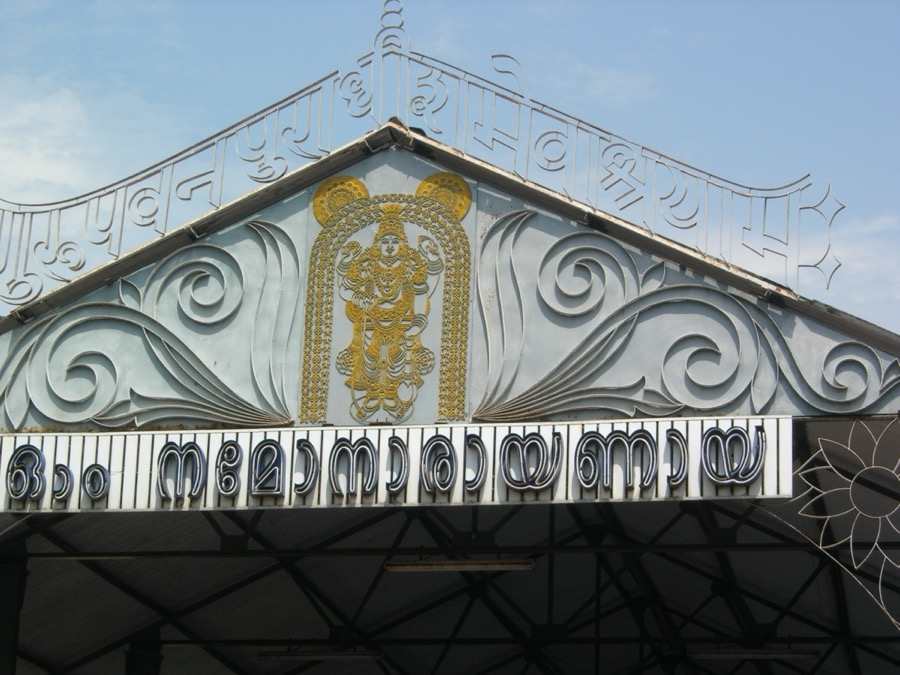
Introduction: Kerala’s Most Beloved Temple
In the small town of Guruvāyūr, 26 kilometres northwest of Thrissur city in Kerala, stands a temple that holds an extraordinary place in the spiritual life of South India. The Guruvāyūr Śrī Kṛṣṇa Temple — revered as “Bhūlōka Vaikuṇṭham” (Vaikuṇṭha on Earth) and the “Dvārakā of the South” — is among the most visited and deeply cherished Hindu temples in the world. An estimated 50,000 to 70,000 devotees visit this temple daily, a number that swells to hundreds of thousands during major festivals.
What makes Guruvāyūr unique in the landscape of Kṛṣṇa worship is the form of the deity enshrined here. Unlike the temples of Vṛndāvana and Mathurā in North India, where Kṛṣṇa is worshipped primarily as the playful child (Bāla Kṛṣṇa) or the romantic cowherd (Gopāla), the Guruvāyūrappan image presents Kṛṣṇa in his cosmic, four-armed Viṣṇu form (caturbhuja). The deity stands holding the conch (śaṅkha), the discus (sudarśana cakra), the mace (gadā), and the lotus (padma) — the four attributes of Viṣṇu — yet is addressed with the intimate affection reserved for the child Kṛṣṇa. This synthesis of cosmic majesty and intimate devotion is the theological hallmark of Guruvāyūr.
The temple is also inseparable from one of the greatest works of Sanskrit devotional literature: the Nārāyaṇīyam, composed by Mēlpattūr Nārāyaṇa Bhaṭṭatiri in 1586 CE while seated before this very image. The poem, a condensation of the entire Bhāgavata Purāṇa into 1,034 verses, represents one of the supreme achievements of Hindu literary devotion.
The Founding Legend: Guru and Vāyu
The Journey of the Sacred Image
The name “Guruvāyūr” is traditionally derived from the names of its two mythological founders: Guru (Bṛhaspati, the preceptor of the gods) and Vāyu (the wind god). According to the temple’s sthala purāṇa (place-legend), preserved in the Nārada Purāṇa and elaborated in the local Kōkilasandēśam:
At the end of Lord Kṛṣṇa’s earthly incarnation, as the Yādava dynasty was destroyed by internal strife and the city of Dvārakā was about to be submerged by the sea, Kṛṣṇa instructed his disciple Uddhava to ensure that the sacred image worshipped by Kṛṣṇa’s own parents — Vasudēva and Dēvakī — would be preserved. This image, originally fashioned by Viśvakarmā (the celestial architect) from the pātāla-añjana (a divine dark stone), had been worshipped by Brahmā himself before being passed to Sutapas and Pṛśni, through successive divine custodians, and finally to Vasudēva and Dēvakī.
As Dvārakā sank beneath the waves, Bṛhaspati and Vāyu retrieved the image from the sea. Guided by Lord Śiva himself — who directed them to “the place where I am performing tapas” — they carried the mūrti southward to the sacred spot where Śiva was meditating beside a lake called Rudratīrtha. Śiva welcomed them and indicated that this was the destined place for the image’s installation. Bṛhaspati (Guru) and Vāyu installed the idol, and the place became known as Guru-vāyūr.
The Mammiyur Shiva Temple
A crucial element of the founding legend is that Lord Śiva was already present at the site, performing penance. The Śiva temple at Mammiyūr (a short distance from the Guruvāyūr temple) is believed to be this original location of Śiva’s tapas. Temple tradition holds that one’s pilgrimage to Guruvāyūr is incomplete without also visiting the Mammiyūr Śiva temple — a beautiful expression of the Vaiṣṇava-Śaiva harmony that characterises Kerala’s religious culture.
The Deity: Guruvāyūrappan
Iconography and Form
The Guruvāyūrappan image stands approximately four feet tall, carved from the dark pātāla-añjana stone. The four-armed deity stands in samapāda (equal-footed) posture, holding:
- Right upper hand: Sudarśana Cakra (discus)
- Left upper hand: Pāñcajanya Śaṅkha (conch)
- Right lower hand: Kaustubha Gadā (mace)
- Left lower hand: Padma (lotus)
The deity is adorned daily with elaborate decorations (alaṅkāra), and the specific decoration changes throughout the day. The most prized darśan times are:
- Nirmalya Darśan: The first darśan of the day (around 3:00 AM), when the deity is seen in the previous day’s decorations before they are removed
- Śṛṅgāra Darśan: The post-decoration darśan when fresh ornaments and garlands are placed
- Uṣa Pūjā: The morning worship with elaborate flower offerings
The image is also known as “Uṇṇi Kaṇṇan” (Baby Kṛṣṇa) in popular devotion, and devotees address the four-armed cosmic form with the tenderness one would show a child — bringing butter, bananas, and sweets as offerings, as if feeding the baby Kṛṣṇa of Vṛndāvana.
The Ashtami Rohini Connection
Guruvāyūrappan is especially associated with the celebration of Śrī Kṛṣṇa Janmāṣṭamī (Aṣṭamī Rōhiṇī in the Kerala tradition), the birthday of Lord Kṛṣṇa. The Janmāṣṭamī celebrations at Guruvāyūr are among the grandest in India, with the temple decorated in its finest regalia and hundreds of thousands of devotees gathering for midnight darśan, replicating the moment of Kṛṣṇa’s birth at midnight in the prison of Kaṃsa.
The Nārāyaṇīyam: A Masterpiece Born at Guruvāyūr
Mēlpattūr Nārāyaṇa Bhaṭṭatiri
The Nārāyaṇīyam is inseparable from the story of its author, Mēlpattūr Nārāyaṇa Bhaṭṭatiri (1559-1632 CE), one of the greatest Sanskrit scholars Kerala has produced. Bhaṭṭatiri was a student of the celebrated grammarian Acyuta Piṣāraṭi and was deeply learned in the Vedānta, Vyākaraṇa (grammar), and Jyotiṣa (astrology) traditions.
According to tradition, Bhaṭṭatiri’s guru, Acyuta Piṣāraṭi, was afflicted with a severe case of vāta rōga (rheumatic illness). The devoted student is said to have prayed to take upon himself his teacher’s disease, and the illness was transferred to Bhaṭṭatiri. Crippled and suffering, Bhaṭṭatiri retreated to the Guruvāyūr temple and began composing the Nārāyaṇīyam as both a devotional offering and a prayer for healing.
The Poem
The Nārāyaṇīyam consists of 1,034 verses (ślōkas) arranged in 100 daśakas (groups of ten). Each daśaka concludes with a prayer to Guruvāyūrappan for the alleviation of suffering. The poem condenses the entire 18,000-verse Śrīmad Bhāgavata Purāṇa into this compact form, retelling the major episodes of Viṣṇu’s avatāras with particular emphasis on the Kṛṣṇa narratives.
The literary quality of the Nārāyaṇīyam is extraordinary. Written in classical Sanskrit with a mastery of metre and figure that rivals the best of Kālidāsa, the poem transforms doctrinal theology into living devotion. The 100th and final daśaka — the Keśādi-pāda Varṇanam (Description from Head to Toe) — is one of the most celebrated passages in Sanskrit devotional literature, describing Guruvāyūrappan’s beauty from his crown to his lotus feet:
“I see your lotus face, O Guruvāyūrappa, radiant as a thousand moons; your eyes like lotuses blooming at dawn; your smile that puts to shame the jasmine bud…”
According to temple tradition, upon completing the 100th daśaka on the 100th day of composition (the day of the star Puṣya in the month of Vṛścika, corresponding to November-December 1586 CE), Bhaṭṭatiri had a vision of Guruvāyūrappan in all his splendour. His illness was cured, and he lived for another 46 years. The date of the poem’s completion is still celebrated at the temple as Nārāyaṇīya Dīnam.
Temple Traditions and Festivals
Guruvāyūr Ēkādaśī
The most important annual festival at Guruvāyūr is the Guruvāyūr Ēkādaśī, observed on the Śukla Ēkādaśī (eleventh day of the waxing moon) in the month of Vṛścika (November-December). This day is believed to be the anniversary of the deity’s installation and is one of the most auspicious days in the Kerala Hindu calendar.
On Guruvāyūr Ēkādaśī, devotees observe a strict fast (upavāsa) and maintain an all-night vigil at the temple. The temple is decorated with thousands of oil lamps (vilakku), and the deity receives special elaborate alaṅkāras. The belief is that worship performed on this day yields a spiritual merit equivalent to performing worship on every other Ēkādaśī of the year combined.
Utsavam: The Annual Festival
The annual Utsavam (festival) at Guruvāyūr, held over ten days in the month of Kumbha (February-March), is one of the grandest temple celebrations in Kerala. The festival features:
- Elephant processions: Caparisoned elephants bearing the deity’s replica (utsava bēra) parade through the streets accompanied by the pañcavādya — the traditional Kerala temple orchestra of five instruments (timila, maddaḷam, iḍakka, kompu, and ciṉṉam)
- Kūttambalam performances: Classical Kerala performing arts, including Kūṭiyāṭṭam (the world’s oldest surviving Sanskrit theatre tradition, recognised by UNESCO), Kathakali, and Ōṭṭan Tullal
- Special pūjās: Elaborate worship ceremonies including the Pāyasa Abhiṣēka (bathing the deity in payasam — a sweet milk preparation)
Tulsidas and the Vilakkunnerthu
A distinctive offering at Guruvāyūr is the Vilakkunnērthu — the offering of oil lamps. Devotees purchase ghee or oil to light the massive bronze lamps that line the temple’s inner and outer precincts. On special occasions, thousands of lamps are lit simultaneously, transforming the temple into a sea of golden light. This practice connects to the Vaiṣṇava teaching that the Lord is jyōtiṣāṃ jyōtiḥ — “the Light of lights” (Bṛhadāraṇyaka Upaniṣad 4.4.16, echoed in the Bhagavad Gītā 13.18).
The Elephants of Guruvāyūr
Punnathur Kotta Elephant Sanctuary
Guruvāyūr is inseparable from its elephants, which play a central role in temple worship and festival life. The temple maintains the Punnāttūr Koṭṭa Elephant Sanctuary (also called Āṉakkōṭṭa, “Elephant Palace”), located about 3 kilometres from the main temple. This sanctuary, housed in the former palace of the Punnāttūr Koṭṭa estate, is one of the largest elephant care facilities in India, housing approximately 50-60 elephants at any given time.
The elephants at Guruvāyūr are considered sacred and are donated to the temple by devotees fulfilling vows. The most famous elephant in the temple’s history was Kēśavan (1904-1976), a magnificent tusker who served as the lead elephant in temple processions for decades. Kēśavan’s devotion to the temple is legendary; it is said that he would spontaneously kneel before the sanctum during processions. After his death, a life-sized statue was erected in his memory, and the anniversary of his death is observed at the temple.
Elephants in Worship
In Guruvāyūr’s ritual tradition, elephants are not merely processional animals but active participants in worship. During festivals, the leading elephant carries the deity’s processional image (tīḍāmbam) atop its head, shaded by the ceremonial umbrella (muttukkuṭa). The elephant’s measured, stately gait through the temple streets, accompanied by the thundering pañcavādya orchestra, is one of the most iconic sights in Kerala’s religious life.
The tradition of elephant worship at Guruvāyūr also reflects the Purāṇic association of elephants with Lord Viṣṇu. The Gajarāja Mōkṣam — the liberation of the elephant king Gajēndra from the grip of a crocodile, as narrated in the Bhāgavata Purāṇa (8.2-4) — is a beloved episode in Vaiṣṇava theology, and Guruvāyūr’s elephant tradition is seen as a living expression of this divine compassion.
Social History: The Guruvayur Satyagraha
The Guruvāyūr temple occupies a significant place in India’s social reform history. In 1931-32, a satyāgraha (non-violent protest) was organized to demand the right of entry for all Hindus regardless of caste — at a time when Dalits and lower-caste Hindus were prohibited from entering the temple. The movement was led by K. Kelappan, known as “Kerala’s Gandhi,” with active support from Mahatma Gandhi himself, and saw participation from numerous freedom fighters including A.K. Gopalan.
Although the satyāgraha was suspended in 1932 at Gandhi’s request (to support the wider national movement), it laid the groundwork for the historic Temple Entry Proclamation of 1936 issued by Maharaja Chithira Thirunal of Travancore, which opened all Hindu temples in the state to people of all castes. This proclamation — one of the most significant social reform acts in Indian history — transformed not only Guruvāyūr but the entire landscape of temple worship in Kerala.
Guruvāyūr in Malayalam Literature and Culture
Guruvāyūr is woven deeply into the fabric of Malayalam literary and cultural life. The temple figures prominently in:
-
Pūntānam Nambudiri’s Jñānapāna (16th century): This philosophical poem in simple Malayalam verse, composed by a contemporary and devotee-rival of Mēlpattūr, is one of the most beloved works in Malayalam literature. Pūntānam, a simple devotee rejected by the scholarly elite, is said to have been publicly acknowledged by Guruvāyūrappan himself, who declared: “I prefer the devotion of Pūntānam to the grammar of Bhaṭṭatiri.”
-
Kunchan Nambiar’s Ōṭṭan Tullal (18th century): The founder of this popular Kerala performing art was closely associated with Guruvāyūr, and his satirical verse narratives frequently reference the temple.
-
Maharaja Swathi Tirunal’s compositions (19th century): The composer-king of Travancore composed several kṛtis (devotional songs) dedicated to Guruvāyūrappan that are central to the Carnatic music repertoire.
In modern Malayalam literature, the iconic novelist M.T. Vasudevan Nair and poet Vallathol Narayana Menon have drawn upon Guruvāyūr as a symbol of Kerala’s spiritual identity. The phrase “Guruvāyūrappante Nāṭṭil” (“In Guruvāyūrappan’s land”) is used colloquially to refer to Kerala itself, reflecting the extent to which this temple has become synonymous with the cultural identity of the state.
Conclusion: The Light of Guruvāyūr
Guruvāyūr endures as a living testament to the Vaiṣṇava tradition’s capacity to unite the transcendent and the intimate. The four-armed cosmic deity is also Uṇṇi Kaṇṇan, the baby who accepts butter and bananas with the same hands that hold the weapons of cosmic order. The temple that inspired one of Sanskrit’s greatest poems is also the temple where a simple poet’s devotion was preferred over scholarly grammar. The elephants that carry the Lord through the streets are themselves recipients of divine grace.
As the Nārāyaṇīyam concludes: “O Vāyupuranivāsin (dweller of Guruvāyūr), O physician of all worldly ills, O ocean of compassion — may the breeze that carries the fragrance of your tulasī garlands dispel all my afflictions” (Nārāyaṇīyam 100.10). For millions of devotees across Kerala and beyond, this prayer, first uttered by a crippled scholar over four centuries ago, remains as urgent and as answered as ever.