Introduction: A Forest of Temples
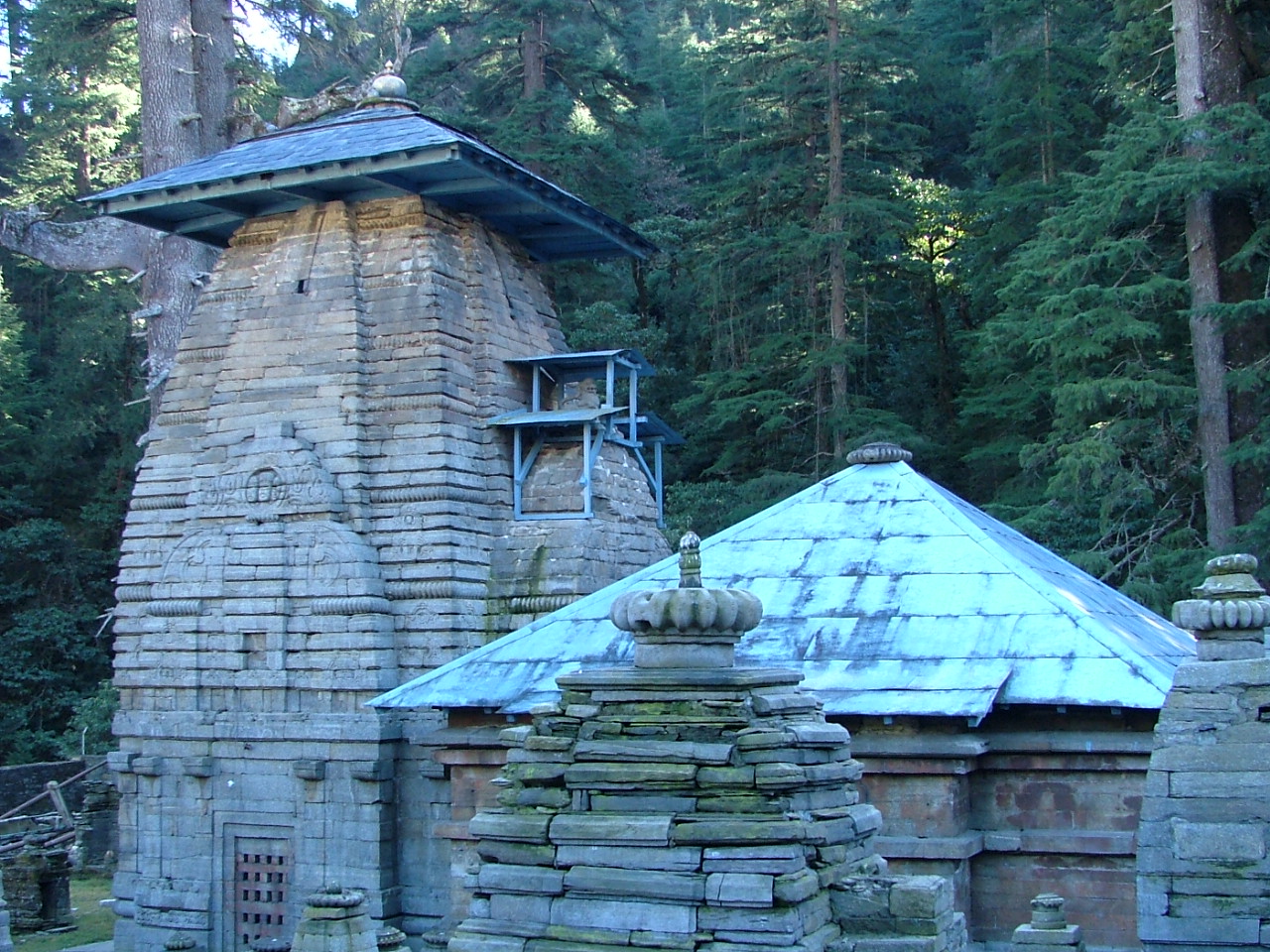
In the Himalayan foothills of the Kumaon region, approximately 36 kilometres northeast of the hill town of Almora, a narrow valley of ancient deodar cedars (Cedrus deodara — literally “timber of the gods”) shelters one of India’s most extraordinary concentrations of sacred architecture. This is Jageshwar (Jāgeśvara), a complex of 124 Hindu temples — nearly all dedicated to Lord Śiva — clustered along the banks of the small Jaṭāgaṅgā stream in a setting of primeval forest silence.
The temples of Jageshwar span roughly five centuries of construction, from the 7th to the 12th centuries CE, encompassing the reigns of the Katyūrī dynasty and their successors. They range from grand Nāgara-style temples with towering śikharas to tiny single-cell shrines barely large enough for one worshipper. Together, they constitute one of the densest concentrations of early medieval Hindu temple architecture in northern India — a sacred forest where stone and cedar have grown old together.
Protected as a monument of national importance by the Archaeological Survey of India (ASI), Jageshwar is also a living pilgrimage site. Local tradition identifies the Jageshwar Liṅga as the Nāgeśa Jyotirliṅga — the eighth of Śiva’s twelve self-manifested liṅgas of light — though this identification is contested by the more widely recognized Nāgeśvara Jyotirliṅga near Dwārakā in Gujarat. For the people of Kumaon, however, there is no doubt: Jageshwar is their Jyotirliṅga, their axis mundi, the place where Śiva dwells in the heart of the forest.
Sacred Geography: The Deodar Valley
The Jaṭāgaṅgā Stream
The temples of Jageshwar are arranged along both banks of the Jaṭāgaṅgā, a small perennial stream whose name means “the Gaṅgā of [Śiva’s] matted locks.” The name itself consecrates the landscape: just as the heavenly Gaṅgā descends through Śiva’s jaṭā (matted hair) to reach earth, so this Himalayan stream flows through the sacred deodar grove as a terrestrial echo of that cosmic event.
The valley sits at an elevation of approximately 1,870 metres above sea level, surrounded by densely forested ridges. The deodar cedars that canopy the temple complex are themselves objects of veneration — deodara derives from the Sanskrit devadāru, “wood of the gods,” and these trees are considered sacred to Śiva. The combination of ancient stone temples beneath a canopy of thousand-year-old cedars, with the sound of running water and birdsong, creates an atmosphere that visitors consistently describe as one of the most spiritually moving in all of India.
The Three Temple Groups
The 124 temples of Jageshwar are organized into three principal clusters:
-
Dandeshwar Group (eastern end): Centred on the Daṇḍeśvara Temple, the largest single structure in the complex. This group includes approximately 20 temples and is the first encountered by pilgrims approaching from the town.
-
Jageshwar Group (central): The main cluster, centred on the Jageshwar Mahādeva Temple (the principal shrine) and including the Mṛtyuñjaya Temple, Kedareshwar Temple, Sūrya Temple, Kuber Temple, Puṣṭi Devī Temple, and the Navagraha (Nine Planets) Temple. This group contains the majority of the complex’s temples.
-
Kuber Group (western end): A smaller cluster including the Kuber Temple and several subsidiary shrines.
Beyond these main groups, the sacred zone extends to include Bāl Jageshwar (approximately 3 km away), a subsidiary site with its own cluster of temples dedicated to the “child” form of Jageshwar, set in an equally beautiful deodar grove.
Historical Development
The Katyūrī Dynasty (7th-11th Centuries)
The earliest temples at Jageshwar date to the 7th century CE and are attributed to the Katyūrī dynasty, the first historically documented rulers of the Kumaon region. The Katyūrīs, who traced their lineage to the ancient kingdom of Kartṛpura, established their capital at Kartarpura (modern Baijnāth in Bageshwar district) and were enthusiastic patrons of Śaiva worship.
Epigraphic evidence — inscriptions on temple walls and copper plates found in the region — confirms continuous royal patronage through the Katyūrī period. A notable inscription in the Jageshwar complex records a land grant by a Katyūrī king for the maintenance of temple worship, providing valuable evidence of the administrative infrastructure that sustained the complex through the centuries.
The earliest temples exhibit a simple Nāgara style with curvilinear śikharas (towers) and relatively austere ornamentation. As the centuries progressed, the temples grew more elaborate, with increasingly complex mouldings, sculptural panels, and ornamental doorframes (śākhās).
The Chand Dynasty and Later Periods (11th-18th Centuries)
After the decline of the Katyūrīs, the Chand dynasty rulers of Kumaon continued to patronize Jageshwar. Temples from this period show the evolution of the Nāgara style in its regional Kumaoni variant, with distinctive features such as sloping stone roof-slabs (to shed snow), carved wooden balconies on adjacent structures, and a more compact building scale suited to the mountainous terrain.
The last major phase of temple building occurred in the 17th-18th centuries under the later Chand kings, who also commissioned restoration of earlier structures. Following the British annexation of Kumaon in 1815, the temples entered a period of relative neglect until the Archaeological Survey of India assumed responsibility for their conservation in the 20th century.
Principal Temples
Jageshwar Mahādeva Temple
The main temple of the complex, Jageshwar Mahādeva, houses the primary Śiva Liṅga that local tradition identifies as the Nāgeśa Jyotirliṅga. The temple’s garbhagṛha (sanctum) is accessed through a small maṇḍapa (hall), and the liṅga — a naturally formed stone of considerable antiquity — sits in a yoni-pīṭha (pedestal) that channels water offerings into the Jaṭāgaṅgā stream below.
The temple’s exterior features intricate carvings of river goddesses (Gaṅgā and Yamunā) flanking the doorway, Śiva in various forms on the outer walls, and a well-preserved Nāgara śikhara with āmalakas (ribbed discs) crowning the summit. The doorframe’s multiple śākhās (jambs) display scrollwork, mithuna (amorous couple) figures, and vyāla (mythical beast) brackets characteristic of 8th-9th century North Indian temple art.
Daṇḍeśvara Temple
The Daṇḍeśvara Temple is the largest structure in the complex, with a substantial maṇḍapa that can accommodate dozens of worshippers. The name refers to Śiva as the “Lord of Punishment” (daṇḍa) — an epithet linked to the Pāśupata concept of Śiva as the cosmic disciplinarian who wields the rod of karmic law. The temple’s interior contains remarkable carved ceiling panels and pillar brackets depicting Śiva’s various forms.
A notable feature is the series of stone panels on the temple’s outer walls depicting Lakulīśa (see below), identifiable by his characteristic attributes: a club (lakuṭa) in one hand and a citron fruit in the other, seated in padmāsana (lotus posture) with an ithyphallic form. These panels provide direct evidence of the Pāśupata-Lakulīśa sect’s influence at Jageshwar.
Mṛtyuñjaya Temple
Dedicated to Śiva as Mṛtyuñjaya (“Conqueror of Death”), this temple is associated with the Mahāmṛtyuñjaya Mantra (Ṛg Veda 7.59.12): “Om tryambakaṃ yajāmahe sugandhiṃ puṣṭivardhanam / urvārukam iva bandhanān mṛtyor mukṣīya māmṛtāt” — “We worship the three-eyed one who nourishes and increases fragrance; as the cucumber is freed from its stalk, may we be liberated from death, not from immortality.”
Pilgrims visit this temple specifically to perform pūjā for the longevity of family members and for healing from illness. The temple houses a particularly revered liṅga and maintains a tradition of special abhiṣeka on Mahāśivarātri.
Navagraha Temple
The Navagraha (Nine Planets) Temple houses sculpted representations of the nine celestial bodies of Vedic astrology: Sūrya (Sun), Candra (Moon), Maṅgala (Mars), Budha (Mercury), Bṛhaspati (Jupiter), Śukra (Venus), Śani (Saturn), Rāhu, and Ketu. Pilgrims perform specific worship here to mitigate unfavourable planetary influences in their horoscopes — a practice that connects Jageshwar to the broader tradition of Jyotiṣa (Hindu astrology) and its integration with temple worship.
The Lakulīśa-Pāśupata Connection
The Pāśupata Sect at Jageshwar
One of the most significant aspects of Jageshwar’s religious history is its deep connection to the Pāśupata sect, the oldest organized Śaiva tradition in Hinduism. The Pāśupatas, followers of the philosophical system attributed to Lakulīśa (the “Lord with the Club”), are described in the Pāśupata Sūtras and the Gaṇakārikā, and their practices included specific forms of worship, ascetic discipline, and devotional yoga.
Archaeological evidence at Jageshwar — including multiple Lakulīśa sculptures in iconic seated posture, inscriptions referencing Pāśupata ācāryas (teachers), and the architectural plan of certain temples that suggests Pāśupata ritual requirements — indicates that the complex served as a major centre of the Pāśupata order from at least the 8th century CE.
Lakulīśa: The Last Incarnation of Śiva
According to Pāśupata tradition, Lakulīśa was the twenty-eighth and final incarnation of Śiva on earth, born in Kāyāvarohaṇa (modern Karvan in Gujarat). He is credited with systematizing Pāśupata doctrine and training the four principal disciples — Kuśika, Gārgya, Kauruṣya, and Maitreya — who spread the teaching across India. The prominence of Lakulīśa imagery at Jageshwar suggests that the complex was either founded or significantly expanded by Pāśupata missionaries who brought the sect’s teachings to the Kumaon hills.
The Pāśupata presence at Jageshwar places the complex within a broader network of early medieval Śaiva centres that included Gudimallam in Andhra Pradesh, Mathura in Uttar Pradesh, and Ekaliṅgajī in Rajasthan. The survival of so many Lakulīśa images at Jageshwar makes it one of the most important sites for understanding the art and architecture of this foundational Śaiva movement.
The Nāgeśa Jyotirliṅga Claim
The Debate
The identity of the Nāgeśa (or Nāgeśvara) Jyotirliṅga — listed as one of the twelve in the Śiva Purāṇa (Koṭirudra Saṃhitā 1.21) — is one of the most contested questions in Hindu sacred geography. Three sites claim the distinction: Nāgeśvara near Dwārakā in Gujarat, Aundha Nāganātha in Maharashtra, and Jageshwar in Uttarakhand.
The Jageshwar claim rests on several arguments: the Purāṇic description of the Nāgeśa Jyotirliṅga being located in a forest (the Dārukāvana, “forest of deodar”), the site’s extreme antiquity, the presence of serpent (nāga) imagery throughout the complex, and the unbroken tradition of local worship that identifies the main liṅga as the Nāgeśa. The Sanskrit verse traditionally recited by Kumaoni pilgrims includes Jageshwar (Jāgeśvaram) in the list of twelve Jyotirliṅgas in place of the Nāgeśvara near Dwārakā.
Dārukāvana: The Forest of the Dāru Trees
The Śiva Purāṇa’s account of the Nāgeśa Jyotirliṅga situates it in the Dārukāvana — a forest named after the dāru tree, which is precisely the deodar (devadāru). The narrative describes how Śiva vanquished a demon named Dāruka in this forest and established his liṅga as a mark of victory. Jageshwar’s setting in a dense deodar forest fits this description more literally than any other claimant site, lending strength to the Kumaoni identification.
Bāl Jageshwar: The Child Form of the Lord
Approximately three kilometres from the main complex, along a forested path, lies Bāl Jageshwar — a subsidiary temple cluster dedicated to Śiva in his child (bāla) form. This charming site, set in an equally beautiful deodar grove with a natural spring, attracts devotees seeking blessings for children, particularly for the birth of sons.
The theological concept of Bāl Jageshwar — Śiva as a divine child — is relatively unusual in mainstream Śaiva worship, where Śiva is predominantly depicted as the great ascetic or the cosmic dancer. Local Kumaoni tradition, however, preserves this tender aspect of the deity, and the path between Jageshwar and Bāl Jageshwar is itself considered a devotional journey, walked by pilgrims who seek the Lord’s grace in both his majestic and his gentle forms.
Festivals and Celebrations
Mahāśivarātri
The Great Night of Śiva is the primary festival at Jageshwar, drawing pilgrims from across Kumaon and beyond. The night-long vigil at the Jageshwar Mahādeva Temple includes continuous abhiṣeka of the main liṅga with milk, water from the Jaṭāgaṅgā, and bilva leaves; recitation of the Śrī Rudram and Mahāmṛtyuñjaya Mantra; and communal singing of Śiva bhajans in the Kumaoni tradition. The setting — flickering oil lamps illuminating ancient stone temples beneath towering deodars in the winter cold — creates an atmosphere of extraordinary devotional intensity.
Śrāvaṇa Mondays
The month of Śrāvaṇa (July-August) is sacred to Śiva throughout India, and at Jageshwar each Monday of this month draws large crowds for special worship. Pilgrims walk from surrounding villages carrying brass vessels (kāmandalu) of water from local streams to pour over the Jageshwar liṅga, echoing the ancient tradition of Rudrābhiṣeka.
Jageshwar Monsoon Festival (Jāgeśvara Melā)
A regional fair (melā) is held at Jageshwar during the monsoon season, combining religious observance with social gathering. Kumaoni cultural performances, traditional music, and a vibrant market make this festival an important event in the local calendar, ensuring that Jageshwar remains the spiritual and cultural heartland of the region.
Conservation and Significance
The Archaeological Survey of India has undertaken significant conservation work at Jageshwar since the site’s designation as a protected monument. Restoration efforts have stabilized leaning temples, cleared vegetation encroachment from structural stonework, and established a site museum displaying sculptural fragments, inscriptions, and architectural elements recovered from excavations.
However, the very qualities that make Jageshwar extraordinary — its forest setting, its running water, its antiquity — also present conservation challenges. The roots of the towering deodars, while contributing to the site’s atmospheric beauty, threaten some temple foundations. Moisture from the stream and monsoon rains accelerates stone degradation. Balancing preservation of the built heritage with maintenance of the natural sacred landscape requires ongoing care and expertise.
Conclusion: Where the Gods Dwell in Silence
Jageshwar is not a site of architectural grandeur in the manner of Khajurāho or Kāñcīpuram. Its temples are modest in scale, many barely higher than the surrounding deodars. What makes Jageshwar extraordinary is something less measurable but more profound: the cumulative spiritual weight of over a thousand years of worship concentrated in a single forest valley, where 124 temples of grey stone stand among trees whose Sanskrit name means “timber of the gods.”
For the pilgrim who follows the Jaṭāgaṅgā stream into this ancient valley, the experience is not one of awe at human achievement but of immersion in a landscape where the distinction between the natural and the sacred has been completely dissolved. The deodar forest is the Dārukāvana of scripture. The stream is the Gaṅgā descending through Śiva’s locks. The liṅga in the innermost shrine is the self-manifested light of the Lord. In this quiet fusion of stone, water, and forest, Jageshwar preserves something that many grander temples have lost — the original intimacy of Hindu worship, where the divine is encountered not in spectacle but in silence.