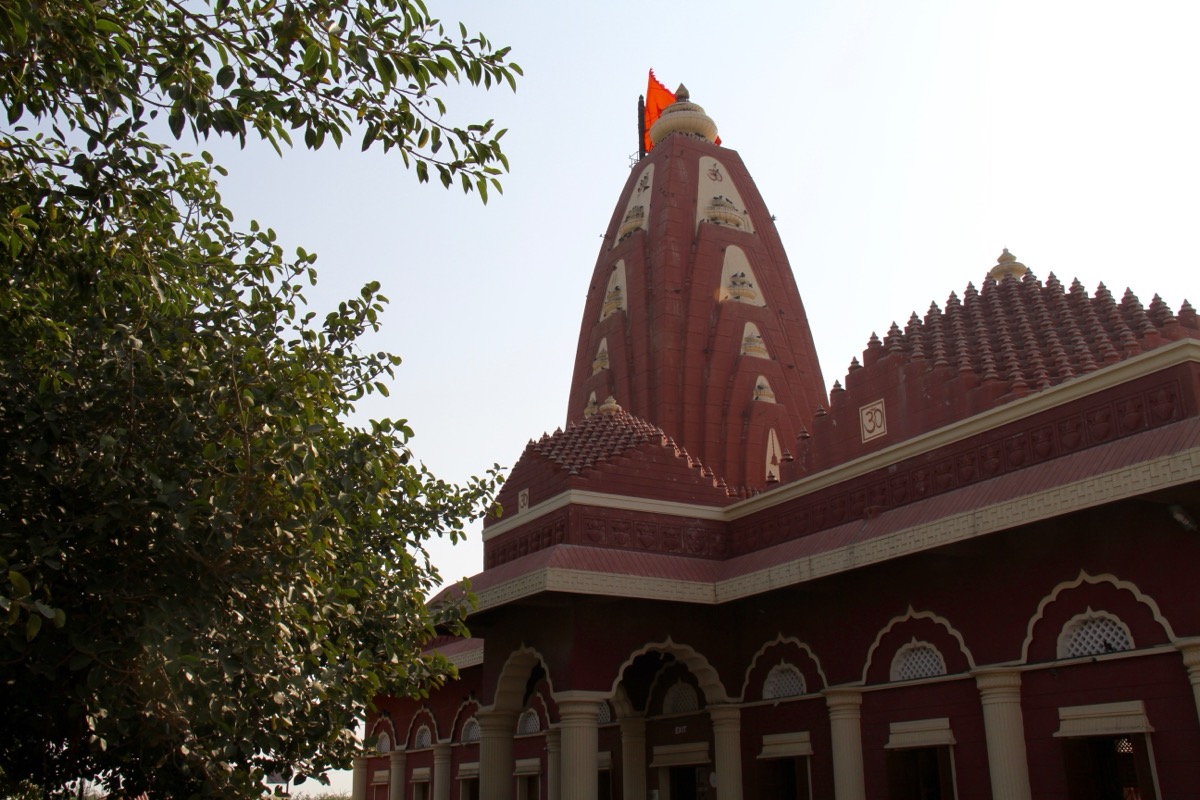
The Nāgeśvara Jyotirliṅga temple, standing on the windswept coast of Saurāṣṭra between Gomtī Dvārakā and Bet Dvārakā in Gujarat, is one of the twelve self-manifested Jyotirliṅgas — radiant pillars of light through which Lord Śiva revealed His infinite, formless nature upon the earth. Known by the epithet “Lord of the Serpents” (Nāga-Īśvara), this shrine is celebrated in the Śiva Purāṇa as the Jyotirliṅga of Dārukāvana, endowed with the singular power to shield its devotees from all poisons — physical and spiritual alike.
The celebrated Sanskrit verse enumerating the twelve Jyotirliṅgas names this shrine:
Nāgeśaṁ Dārukāvane “Nāgeśvara in the forest of Dāruka”
The Legend of Supriya and the Demon Dāruka
The mythological origins of the Nāgeśvara Jyotirliṅga are narrated in the Koṭi Rudra Saṃhitā (Chapters 29-30) of the Śiva Purāṇa and constitute one of the most dramatic tales in the Jyotirliṅga cycle.
The Demoness Dārukā and Her Boon
The story begins with a demoness named Dārukā, wife of the powerful demon Dāruka. Dārukā was an ardent devotee of Goddess Pārvatī, and through years of rigorous penance she won a remarkable boon: the ability to carry an entire forest wherever she wished, and the promise that no one could destroy the demons within it. Pārvatī, pleased with the demoness’s devotion, granted this blessing and named the enchanted forest Dārukāvana in her honour. This vast forest, stretching sixteen yojanas (roughly 200 kilometres), became a mobile kingdom of the demons on the western coast of the ocean.
The Tyranny of Dāruka
Emboldened by his wife’s divine protection, the demon Dāruka and his forces began terrorizing the surrounding lands. They disrupted yajnas (fire sacrifices) conducted by sages, plundered merchant ships, and imprisoned innocent people. When the terrified inhabitants appealed to the great sage Aurva for help, the sage pronounced a curse: if the demons attempted to kill any earthly person, they themselves would perish. Clever and ruthless, Dāruka circumvented the curse by relocating the entire Dārukāvana forest into the ocean, where he continued to torment sailors and travellers from his undersea stronghold.
Supriya’s Unwavering Devotion
Among those captured by Dāruka was a merchant named Supriya, an exemplary Śiva devotee. Despite being imprisoned in the demon’s underwater lair, Supriya refused to abandon his spiritual practice. He fashioned a Pārthiva Liṅga (a liṅga made of earth) in his cell and continued his daily worship of Lord Śiva, applying sacred ash (bhasma) upon his body, wearing a Rudrākṣa rosary, and ceaselessly chanting the Pañcākṣara Mantra: Oṃ Namaḥ Śivāya.
For six long months, Supriya worshipped his earthen liṅga with absolute concentration and devotion, unbroken by fear or suffering. His fellow prisoners, inspired by his example, began joining in the chanting. The reverberations of Oṃ Namaḥ Śivāya filled the demon’s underwater city.
The Divine Intervention
When Dāruka discovered that his prisoners were chanting Śiva’s name, he flew into a rage. He seized his sword and rushed to kill Supriya. But at the very moment the blade was raised, Lord Śiva Himself appeared — emerging from a luminous pit in the earth. The Lord handed the Pāśupata Astra, the most fearsome divine weapon, to Supriya. Armed with this celestial missile, the once-helpless merchant annihilated the demon forces.
The Establishment of the Jyotirliṅga
With Dāruka vanquished and the prisoners freed, Lord Śiva chose to remain at that sacred spot. He assumed the form of a Jyotirliṅga — a self-luminous column of infinite light — and became known as Nāgeśvara, “Lord of the Serpents,” reflecting the association of the site with nāgas (serpent beings) who inhabited the region. Goddess Pārvatī took the name Nāgeśvarī and is worshipped alongside the Lord. As the Śiva Purāṇa declares, this Jyotirliṅga possesses the power to “protect the devotees from all kinds of poisons, especially snake venom,” and to liberate worshippers from worldly attachments such as anger, temptation, and distraction.
The Sacred Liṅga and Its Unique Features
The sanctum sanctorum (garbhagṛha) of the Nāgeśvara temple houses the original Jyotirliṅga, which is fashioned from a distinctive stone known as Dvārakā Śilā. This stone is characterized by small circular chakra designs on its surface, and the liṅga itself is described as resembling a tri-mukhī Rudrākṣa (three-faced Rudrākṣa bead) in form.
What makes this Jyotirliṅga architecturally unusual is that the Śiva Liṅga faces south while the gomukha (the water outlet, shaped like a cow’s mouth, through which abhiṣeka waters drain) faces east. In most Śiva temples, the liṅga faces east and the gomukha faces north. This unusual south-facing orientation links Nāgeśvara to Śiva’s form as Dakṣiṇāmūrti, the south-facing teacher of supreme knowledge, silence, and yoga.
The liṅga is adorned with a silver nāga (serpent) coiled upon it and draped in silver cloth. Behind the liṅga stands an idol of Goddess Pārvatī as Nāgeśvarī. The sanctum also includes images of Lord Gaṇeśa and Hanumān, and a separate shrine for Nandī, Śiva’s celestial bull.
Temple Architecture
The Nāgeśvara Jyotirliṅga temple exemplifies the traditional Meru style of Hindu temple architecture, a form commonly employed in Śiva temples across India. The temple’s design follows the principles of Vāstu Śāstra (Indian architectural science) and is conceived in the śayana (reclining) posture of the human body — a symbolic representation where different parts of the temple correspond to parts of the cosmic being.
The Anthropomorphic Layout
The architectural plan reads as a sacred body:
- Mahādvāra (main gateway): Represents the feet, the point where the pilgrim’s journey begins
- Porch with Gaṇeśa and Hanumān shrines: Represents the arms, guardians flanking the devotee’s path
- Sabhā Maṇḍapa (assembly hall): Represents the torso, where devotees gather
- Antarāla (vestibule): The transitional space between the worshipping assembly and the deity
- Garbhagṛha (sanctum): Represents the head, the seat of consciousness where the Jyotirliṅga resides
The garbhagṛha sits approximately six inches below ground level, making the Nāgeśvara Jyotirliṅga one of the few Jyotirliṅgas enshrined in an underground sanctum. The Raṅga Maṇḍapa is raised two inches above ground, and the antarāla platform serves as an intermediate level — creating a deliberate descent into the earth as one approaches the Lord, symbolizing the inward journey of the soul.
Modern Construction and Materials
The present temple structure stands approximately 110 feet tall and employs RCC (reinforced cement concrete) walls coated with anti-corrosion chemicals to withstand the coastal environment. The exterior is clad in Porbandar stone, the same cream-coloured limestone used in many of Gujarat’s historic temples. Cylindrical fluted columns, marble chambers, and lotus-themed capitals adorned with svastika and Mount Kailāsa imagery enrich the interior. The temple entrance faces west, an unusual orientation that allows worshippers to face the rising sun as they exit after darśana.
The Colossal Śiva Statue
One of the most striking features of the Nāgeśvara temple complex is the towering 25-metre (approximately 82-foot) statue of Lord Śiva in a serene seated posture. This colossal bronze-coloured figure, one of the tallest open-air Śiva statues in India, sits in meditative repose overlooking a large ceremonial pond and verdant gardens. The statue was installed as part of a major renovation and expansion of the temple complex, and it has become an iconic landmark of the Dvārakā region. Visitors approaching the temple first encounter this monumental figure, which creates a sense of awe and spiritual preparation before entering the ancient shrine.
The Location Dispute: Three Claimants
The identity of the “true” Nāgeśvara Jyotirliṅga is a matter of scholarly and devotional debate. Three temples across India each claim to be the original shrine described in the Śiva Purāṇa:
1. Nāgeśvara near Dvārakā, Gujarat
The Dvārakā Nāgeśvara temple is the most widely recognized claimant, supported by the Gujarat state government and the majority of modern pilgrimage circuits. Its proponents argue that “Dārukāvana” is a corruption or variant of “Dvārakā,” and that the temple’s coastal, near-oceanic setting matches the Purāṇic description of Dāruka’s underwater forest kingdom. The association with Lord Kṛṣṇa’s Dvārakā — one of the four sacred dhāmas — further enhances this site’s claim.
2. Aundha Nāgnāth, Maharashtra
The Aundha Nāgnāth temple in Hingoli district, Maharashtra, is an ancient shrine that many Deccan scholars identify as the original Nāgeśvara. This temple has considerable antiquity and some traditions place it among the earliest Jyotirliṅga shrines. The similarity of the name “Nāgnāth” (Lord of Serpents) to “Nāgeśvara” is cited as evidence, and certain Maharashtrian Śaiva lineages maintain unbroken worship traditions at this site spanning centuries.
3. Jāgeśvara, Uttarakhand
The Jāgeśvara temple complex near Almora in the Kumāon hills of Uttarakhand — a cluster of over 100 ancient stone temples dating to the 7th-12th centuries CE — is identified by some northern traditions as the Nāgeśvara Jyotirliṅga. Proponents argue that “Jāgeśvara” is a local phonetic evolution of “Nāgeśvara,” and the dense cedar forests surrounding the site recall the Purāṇic “Dārukāvana.”
The core issue centres on the identification of the epic Dārukāvana forest. Each claimant offers a plausible geographical or philological argument, and devotees of all three traditions regard their respective temple with profound reverence. In mainstream pilgrimage practice today, however, the Gujarat temple near Dvārakā is most commonly included in the standard Dvādaśa Jyotirliṅga circuit.
Connection to Dvārakā and the Kṛṣṇa Tradition
The Nāgeśvara temple’s proximity to Dvārakā — the legendary kingdom of Lord Kṛṣṇa and one of the Char Dhām (four sacred abodes) — places it within one of India’s densest concentrations of sacred geography. Dvārakā is approximately 17 kilometres from Nāgeśvara, and pilgrims traditionally visit both shrines on the same day. Local tradition holds that Lord Kṛṣṇa Himself performed Rudrābhiṣeka (ceremonial bathing of the Śiva Liṅga) at Nāgeśvara, affirming the unity of the Vaiṣṇava and Śaiva traditions at this site.
Archaeological excavations in the Dvārakā region have revealed evidence of at least five earlier cities at the site, lending historical depth to the area’s Purāṇic claims. Marine archaeological surveys off the coast of Dvārakā have also uncovered submerged structures, fuelling scholarly interest in the possibility that the “underwater Dārukāvana” of the Purāṇas may reflect memories of actual coastal submersion events.
Worship Practices and Rituals
Daily Worship Schedule
The temple follows a structured daily worship cycle:
- Maṅgala Āratī (Early Morning Prayer): The day begins before dawn with the first āratī, accompanied by the chanting of Vedic mantras and the sound of temple bells
- Śṛṅgāra Pūjā (Adornment Worship): The Jyotirliṅga is ceremonially adorned with flowers, sandalwood paste (candana), sacred ash (vibhūti), and bilva leaves
- Bilva Arcanā: Offering of sacred bilva (wood-apple) leaves, considered supremely dear to Lord Śiva, while reciting the 108 names of Śiva
- Rudrābhiṣeka: The most important daily ritual, involving the sequential bathing of the liṅga with milk, curd, honey, ghee, and water while priests chant the Śrī Rudram hymn from the Yajurveda
- Sandhyā Āratī (Evening Prayer): A lamp-lit ceremony with devotional songs (bhajana) as twilight descends on the coastal shrine
Darśana Timings
The temple is open for pilgrims in two sessions:
- Morning: 5:30 AM to 1:30 PM
- Evening: 5:00 PM to 9:30 PM
Festivals and Celebrations
Mahā Śivarātrī
The Great Night of Śiva (February-March) is the most important festival at Nāgeśvara. Thousands of devotees undertake night-long fasts and vigils, performing continuous abhiṣeka and chanting of the Pañcākṣara Mantra. The temple remains open throughout the night, and special decorations transform the shrine.
Śrāvaṇa Māsa
The monsoon month of Śrāvaṇa (July-August) is considered especially auspicious for Śiva worship. Every Monday (Somavāra) during this month sees a surge of pilgrims performing fasting and offering water to the liṅga, a practice known as Jalābhiṣeka.
Kārtika Pūrṇimā
On the full moon of the Kārtika month (November), devotees perform ritual bathing in the Gomtī River before proceeding to the temple for special pūjā, marking one of the most sacred bathing days in the Hindu calendar.
Nāga Pañcamī
Given the temple’s association with serpents (nāgas), the festival of Nāga Pañcamī (July-August) holds particular significance here. Devotees offer milk at serpent shrines and pray to Nāgeśvara for protection from snake-related dangers.
Pilgrimage Route: The Western Sacred Circuit
The Nāgeśvara Jyotirliṅga is most commonly visited as part of a broader Saurāṣṭra pilgrimage circuit that encompasses several of India’s most important sacred sites:
- Dvārakādhīśa Temple (Dvārakā): The main Kṛṣṇa temple and Char Dhām site, 17 km from Nāgeśvara
- Bet Dvārakā: The island believed to be Kṛṣṇa’s actual residence, accessible by boat
- Nāgeśvara Jyotirliṅga: En route between Dvārakā and Bet Dvārakā
- Gopī Tālāv: A sacred lake associated with the gopīs of Vṛndāvana
- Somnātha Jyotirliṅga (Verāval): The first of the twelve Jyotirliṅgas, approximately 230 km southeast
This circuit allows pilgrims to visit two Jyotirliṅgas — Nāgeśvara and Somnātha — along with the Char Dhām site of Dvārakā in a single journey, making it one of the most spiritually rewarding pilgrimage routes in western India.
The Spiritual Significance of Nāgeśvara
The Rudra Saṃhitā of the Śiva Purāṇa declares that the Nāgeśvara Jyotirliṅga possesses the unique power to neutralize all poisons:
Nāgeśaṁ Dārukāvane — Viṣaharam Sarvadā “Nāgeśvara in Dārukāvana, the eternal destroyer of all poison.”
This “poison” (viṣa) is understood on multiple levels. At the literal level, the shrine is believed to protect against snake venom — a practical concern in the rural landscapes of Saurāṣṭra. At the metaphorical level, the “poisons” represent the spiritual toxins of kāma (lust), krodha (anger), lobha (greed), moha (delusion), mada (pride), and mātsarya (jealousy) — the six enemies of the soul that bind beings to the cycle of saṃsāra.
The story of Supriya offers a powerful teaching: even in the darkest circumstances — imprisoned, threatened with death, surrounded by hostile forces — unwavering devotion to the Lord brings liberation. Supriya did not fight with physical weapons; his only arsenal was faith and the holy name of Śiva. It was this devotion that summoned divine intervention and transformed a place of imprisonment into a place of eternal sanctity.
Visiting Nāgeśvara: Practical Information
How to Reach:
- By Air: The nearest airport is Jamnagar (approximately 137 km), with connections to Mumbai and Delhi
- By Rail: Dvārakā railway station is approximately 17 km away, connected to major cities
- By Road: Well-connected by state highways; the temple lies on the Dvārakā-Bet Dvārakā road
Best Time to Visit: November through February offers pleasant coastal weather. Mahā Śivarātrī (February-March) and the Śrāvaṇa month (July-August) are the most auspicious periods.
Nearby Accommodation: Dvārakā town offers a range of dharmaśālās (pilgrim rest houses), guest houses, and hotels catering to the steady stream of pilgrims visiting the Jyotirliṅga.
The Nāgeśvara Jyotirliṅga stands as a testament to the enduring power of devotion. In the meeting of ocean and land, of Śaiva and Vaiṣṇava traditions, of ancient myth and living worship, this sacred shrine continues to draw pilgrims who seek the Lord’s protection from the poisons of the world and the radiant grace that transforms suffering into liberation.