Introduction: The Crown Jewel of Dogra Devotion
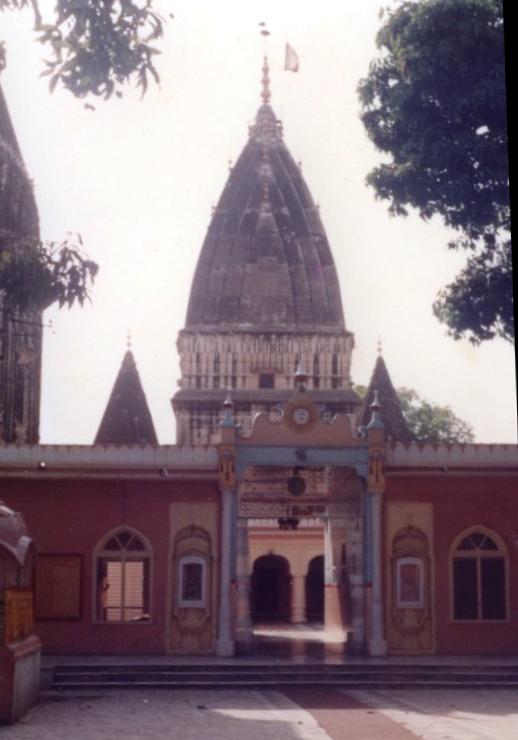
In the heart of the ancient city of Jammu, rising above the bustling streets of the old quarter, the golden śikharas (temple spires) of Śrī Raghunāth Temple pierce the northern sky like radiant fingers pointing towards the heavens. This magnificent temple complex — one of the largest in all of North India — is far more than a place of worship. It is a living chronicle of the Dogra dynasty’s unwavering devotion to Lord Rāma, a repository of India’s manuscript heritage, a centre of Sanskrit learning, and an enduring symbol of the syncretic architectural traditions of the Jammu region.
Built between 1835 and 1860 by two generations of Dogra rulers, Raghunāth Temple encompasses seven distinct shrines, each crowned with its own śikhara, housing nearly the entire Hindu pantheon within its walls. Its inner sanctums are adorned with gold sheets, its galleries hold sacred Śāligrāma stones brought from the Gaṇḍakī River in Nepal, its walls display exquisite paintings of the Jammu School depicting scenes from the Rāmāyaṇa and Mahābhārata, and its library preserves over 6,000 manuscripts in Śāradā and Devanāgarī scripts spanning the full breadth of Vedic, philosophical, and literary traditions.
For the Dogra people of Jammu, Lord Rāma — known here by his dynastic epithet Raghunāth, “Lord of the Raghu lineage” — is not merely a deity to be worshipped but the kuladevata (family deity) of the royal house and, by extension, the spiritual sovereign of the entire region. To visit Raghunāth Temple is to enter the devotional heart of Jammu itself.
Historical Origins: The Vision of Maharājā Gulab Singh
The Founding Impulse (1835)
The story of Raghunāth Temple begins with Mahārājā Gulab Singh (1792—1857), the founder of the Dogra dynasty and the first Mahārājā of the princely state of Jammu and Kashmir. A devout Vaiṣṇava, Gulab Singh conceived the idea of building a grand temple dedicated to Lord Rāma after meeting Śrī Rām Dās Bairāgī, a renowned ascetic and fervent devotee of Lord Rāma who had travelled to Jammu from Ayodhyā to propagate the teachings of the Rāmāyaṇa.
Inspired by Rām Dās Bairāgī’s vision of establishing a centre of Rāma worship in the north, Mahārājā Gulab Singh laid the foundation of the temple in 1835. Some historical accounts suggest preliminary work may have begun as early as 1822, though the formal construction is widely dated to 1835. The site chosen was in the old city of Jammu, north of the river Tawī, at a location that would allow the temple’s spires to dominate the cityscape.
Gulab Singh poured enormous resources into the project. He envisioned not merely a single shrine but an entire temple complex that would serve as a centre of devotion, learning, and cultural preservation. However, the Mahārājā did not live to see the temple completed. His attention was divided between temple construction and the political complexities of consolidating his rule over the newly formed state of Jammu and Kashmir, which he had acquired through the Treaty of Amritsar in 1846.
Completion by Mahārājā Ranbīr Singh (1857—1860)
It fell to Gulab Singh’s son and successor, Mahārājā Ranbīr Singh (1830—1885), to bring his father’s grand vision to fulfilment. Ranbīr Singh, who ascended to the throne in 1857, was even more passionate than his father about Hindu religious patronage and Sanskrit scholarship. He completed the temple complex between 1857 and 1860, adding several shrines, enriching the architectural ornamentation, and — crucially — establishing the institutions of learning and manuscript preservation that would make Raghunāth Temple far more than a house of worship.
Ranbīr Singh’s contributions were transformative. He commissioned the gold plating of the inner walls, installed the sacred Śāligrāma stones, oversaw the painting of the interior panels, and founded the Sanskrit pāṭhaśālā (school) in 1858 and the manuscript library. Under his patronage, the temple became a vibrant centre of Sanskrit learning, drawing scholars from across northern India.
The Dharmarth Trust
In 1846, Mahārājā Gulab Singh established the Dharmarth Trust, a religious endowment to manage and support Hindu temples and institutions. The Trust, formalized with the Ain-i-Dharmarth (Regulations for the Dharmarth Trust) in 1884 under Ranbīr Singh, became the custodian of Raghunāth Temple and continues to manage it to this day. The Dogra royal family has remained the hereditary patron of the Trust, ensuring continuity of care for this sacred complex across nearly two centuries.
Architecture: A Confluence of Styles
The Seven Shrines and Their Śikharas
Raghunāth Temple is not a single structure but a complex of seven distinct shrines, each possessing its own śikhara (spire). The complex sprawls over approximately seven acres in the heart of old Jammu, making it one of the most expansive temple precincts in North India.
The entire complex is built upon a raised octagonal platform standing approximately five feet (1.5 metres) high, lending the temples an elevated grandeur. The front fascia of the main entrance is approximately 40 feet (12 metres) wide, with three entry doors leading to the main shrine, which is set approximately 50 feet (15 metres) from the entrance. The main sanctum measures approximately 20 by 20 feet, surrounded by a 10-foot circumambulatory passage (pradakṣiṇā path) for devotees.
All the spiral-shaped towers are constructed of brick masonry and crowned with bright gold-plated kalaśas (finial pots) in the śikhara style. One distinctive architectural feature is that the tower above the main shrine has a dome rather than the typical pyramidal śikhara, reflecting a Sikh architectural influence — a meaningful design choice that speaks to the syncretic character of the Dogra cultural milieu, which absorbed Mughal, Sikh, and Hindu architectural traditions.
Mughal and North Indian Architectural Fusion
A defining characteristic of Raghunāth Temple’s architecture is its harmonious blending of multiple styles. The stucco-style embellishments, executed in brick masonry and finished with plaster, display floral motifs (particularly lotuses) and geometric designs on the walls, within niches, and across the arches. These decorative elements bear unmistakable echoes of Mughal masonry traditions.
The carvings and arches throughout the complex are described in historical accounts as “extraordinarily resplendent.” The overall architectural programme thus represents a creative synthesis: the śikhara towers follow the North Indian Nāgara temple tradition, the dome over the main shrine reflects Sikh architectural vocabulary, and the decorative ornamentation draws from Mughal sensibilities.
Gold-Covered Interior Walls
One of the most striking features of the temple interior is the gold sheeting that covers the inner walls on three sides of the main shrine. This lavish decoration, commissioned by Mahārājā Ranbīr Singh, creates a luminous, almost otherworldly atmosphere within the sanctum. The gold surfaces reflect the light of the ritual lamps, bathing the mūrti (sacred image) of Lord Rāma in a warm, golden glow that pilgrims describe as a direct experience of divine radiance.
Sacred Contents and Collections
The Deities: A Complete Hindu Pantheon
Raghunāth Temple is remarkable for the sheer comprehensiveness of its divine iconography. The presiding deity is Lord Rāma (Raghunāth), an avatāra of Lord Viṣṇu, enshrined in the garbhagṛha (sanctum sanctorum) of the main shrine along with Goddess Sītā, Lord Lakṣmaṇa, and Lord Hanumān. At the entrance, devotees are greeted by a portrait of Mahārājā Ranbīr Singh and an image of Lord Hanumān.
Beyond the main shrine, the complex houses virtually the entire Hindu pantheon — an unusual and remarkable feature in temple architecture. The seven shrines and their surrounding structures contain:
- Viṣṇu avatāras: Representations of all ten incarnations (Daśāvatāra) of Lord Viṣṇu, with a dedicated gallery depicting their stories
- Lord Śiva: Multiple Śivaliṅgas, including a giant Śivaliṅga, along with various forms of Śiva
- Sūrya Deva: A dedicated shrine to the Sun God with multiple representations
- Goddess Durgā: Shrines to various forms of the Divine Mother
- Lord Gaṇeśa and Lord Kārttikeya: Both sons of Śiva and Pārvatī are honoured
The niches in the walls of the shrines are decorated with approximately 300 well-crafted icons of gods and goddesses, creating a visual encyclopaedia of Hindu sacred art.
The Śāligrāma Gallery
One of Raghunāth Temple’s most sacred treasures is its extraordinary collection of Śāligrāma stones — fossil ammonite stones specially obtained from the Gaṇḍakī River in Nepal. In the Vaiṣṇava tradition, Śāligrāmas are aniconic representations of Lord Viṣṇu, believed to be naturally formed by the divine will and requiring no ritual consecration (prāṇa pratiṣṭhā). They are among the most venerated objects in Hindu worship.
The temple houses a very large number of these Śāligrāmas in a dedicated gallery, alongside a collection of Śivaliṅgas. The juxtaposition of Vaiṣṇava Śāligrāmas and Śaiva liṅgas within a single gallery reflects the Dogra rulers’ inclusive approach to Hindu worship, honouring both the Viṣṇu and Śiva traditions within one sacred complex.
The Jammu School Paintings
The interior panels of the main shrine contain 15 paintings, each approximately nine feet in height, executed in the distinctive Jammu School of painting (Pahāṛī miniature tradition). These paintings depict scenes from the great Hindu epics and sacred texts:
- Rāmāyaṇa scenes: Episodes from the life of Lord Rāma, forming the primary narrative cycle
- A prominent Sītā Svayaṃvara scene: A large painting depicting the famous episode where Rāma breaks Lord Śiva’s bow to win Sītā’s hand in marriage
- Mahābhārata and Bhagavad Gītā themes: Depictions of Rāma Līlā and Kṛṣṇa Līlā
- Individual deity portraits: Images of Gaṇeśa, Kṛṣṇa, and Śeṣaśāyī Viṣṇu (Viṣṇu reclining on the cosmic serpent Śeṣa)
- Historical figures: Portraits of saints such as Kabīr, as well as community members
These paintings represent an invaluable artistic heritage, blending devotional iconography with the refined aesthetics of the Pahāṛī painting tradition that flourished in the hill kingdoms of northern India.
The Manuscript Library: A Treasure of Sanskrit Learning
The 6,000-Manuscript Collection
Perhaps Raghunāth Temple’s most significant contribution to Indian intellectual heritage is its extraordinary library of over 6,000 manuscripts in multiple Indian languages. Established under the patronage of Mahārājā Ranbīr Singh, this collection represents one of the most important repositories of Hindu and Buddhist textual traditions from the Kashmir region.
The manuscripts encompass an astonishingly broad range of subjects:
- Vedic literature: Texts of the four Vedas and their ancillary sciences (Vedāṅgas)
- Philosophy: Works of the six orthodox schools (Ṣaḍdarśana), including Vedānta, Sāṃkhya, Yoga, Nyāya, Vaiśeṣika, and Mīmāṃsā
- Epics and Purāṇas: Manuscripts of the Rāmāyaṇa, Mahābhārata, and major Purāṇas
- Medical texts: Āyurvedic treatises and related works
- Literary works: Kāvya (poetry) and nāṭya (dramatic) literature
The Śāradā Script Heritage
What makes this collection particularly precious is its strong representation of manuscripts in the Śāradā script, the ancient writing system of the Kashmir region. Many of these manuscripts are copies made in the nineteenth century from Śāradā originals that were not available for purchase, transcribed into Devanāgarī by scribes employed by the library. This systematic copying programme, initiated under Ranbīr Singh’s patronage, preserved texts that might otherwise have been lost.
The Raghunāth Temple library remains a significant scholarly source for Śāradā script manuscripts and holds one of the largest collections of Hindu and Buddhist texts of the Kashmir tradition. In recent years, the eGangotri digital preservation project has worked to digitize portions of this collection, making these rare texts accessible to scholars worldwide through the Internet Archive.
The Sanskrit Pāṭhaśālā
Adjacent to the library, Mahārājā Ranbīr Singh established a Sanskrit pāṭhaśālā (school) in 1858 on the temple premises. The school welcomed students from all castes and social classes, a notably progressive policy for the era. Until 1938, it functioned as a government institute before being transferred to the Dharmarth Trust.
The pāṭhaśālā became renowned for producing brilliant Sanskrit priests, scholars, and teachers, serving as a vital centre for the transmission of traditional Vedic learning. Its graduates carried the Sanskrit traditions of Jammu throughout India, contributing to the preservation of Hindu scholarly traditions.
A Centre of Inter-Religious Scholarship
Remarkably, the temple complex also housed a translation centre where books on philosophy and history in Arabic and Persian were translated by Muslim scholars into Sanskrit. Conversely, Hindu paṇḍitas translated many scriptures into Hindi and Dogri languages. This inter-religious intellectual exchange, fostered under Dogra patronage, speaks to a remarkable spirit of scholarly ecumenism.
The Dogra Legacy and Rāma Worship in Jammu
The Kuladevata Tradition
For the Dogra community, the largest ethnic group of the Jammu region, Lord Rāma is not merely one deity among many but the kuladevata — the family deity and divine protector. The construction of Raghunāth Temple was thus an act of supreme devotion, an offering from the ruling dynasty to its divine sovereign.
This deep connection to Rāma worship shaped the cultural identity of the entire region. The Dogra rulers, from Gulab Singh onwards, styled themselves as servants of Raghunāth, and the temple’s construction was understood as an act of rājadharma (the sacred duty of kings) to provide the community with a worthy abode for their beloved deity.
Festivals and Celebrations
Raghunāth Temple comes alive during the major Hindu festivals, particularly those associated with Lord Rāma:
- Rāma Navamī: The birthday of Lord Rāma is the principal festival of the temple, celebrated with elaborate rituals, recitations of the Rāmāyaṇa, and processions that draw thousands of devotees from across the region.
- Vijaya Daśamī (Dussehra): Celebrations marking Rāma’s victory over Rāvaṇa, featuring dramatic Rāma Līlā performances.
- Dīvālī: The festival of lights, commemorating Rāma’s return to Ayodhyā, is celebrated with spectacular illumination of the temple complex.
- Navarātri: Both Chaitra and Śārad Navarātri attract large gatherings of devotees.
In a notable innovation, Dr. Karan Singh, the contemporary scion of the Dogra dynasty, introduced South Indian utsava mūrtis (procession deities) for the Vijaya Daśamī and Janmāṣṭamī celebrations, creating a unique synthesis of North and South Indian temple traditions.
Modern Expansion Under Dr. Karan Singh
Dr. Karan Singh, the son of the last ruling Mahārājā, has continued the family tradition of temple patronage by adding four new shrines to the complex:
- Mātā Vaishno Devī Temple: A marble shrine housing a Durgā mūrti behind the main shrine
- Naṭarāja-Bagalāmukhī Temple: Housing images of Gaṇeśa, Naṭarāja, and Bagalāmukhī, featuring a one-metre-high lead crystal Śivaliṅga fabricated in Germany
- Mahākālī Temple: Converted from a storehouse into a shrine
- Kārttikeya Temple: With mūrtis sourced from Tamil Nadu
These additions represent the continuing vitality of the temple complex and the ongoing dialogue between North and South Indian devotional traditions.
The 2002 Terrorist Attacks and Resilience
The Attacks
Raghunāth Temple suffered two devastating terrorist attacks in 2002, marking one of the darkest chapters in its history. On 30 March 2002, two suicide bombers attacked the temple, killing eleven people including three security personnel and injuring twenty others. The tragedy was compounded on 24 November 2002, when a second attack saw two suicide bombers storm the temple with grenades and automatic weapons, killing fourteen devotees and injuring forty-five more.
India attributed both attacks to the Pakistan-based militant organisation Lashkar-e-Taiba. Deputy Prime Minister Lal Krishna Advani identified the chief of Lashkar-e-Taiba, Hafiz Muhammad Saeed, as responsible for the attacks in a statement to the Lok Sabha.
Restoration and Reopening
In the aftermath of the attacks, the temple was closed to the general public for an extended period while security was comprehensively upgraded and structural restoration was undertaken. The ancient stone structures, built with the sturdy masonry of the Dogra era, endured the blasts without total collapse, enabling restoration efforts to focus on functional recovery and security fortification rather than complete reconstruction.
After eleven long years, in 2013, the gates of Raghunāth Temple were fully reopened to devotees. The restoration prioritized the preservation of the temple’s historical character while implementing modern security measures. Today, the temple operates with enhanced security protocols, but the devotional atmosphere remains undiminished. The reopening was celebrated as a triumph of faith over violence, and Raghunāth Temple’s endurance through this ordeal has only deepened its significance as a symbol of the resilience of Hindu dharma in the Jammu region.
Pilgrimage and Practical Significance
A Spiritual Starting Point
Raghunāth Temple occupies a unique place in the pilgrimage geography of the Jammu region. Many pilgrims undertaking the sacred Amarnāth Yātrā — the annual pilgrimage to the ice liṅga cave shrine in the Himalayas — begin their journey with a visit to Raghunāth Temple to seek Lord Rāma’s blessings. Similarly, devotees travelling to the nearby Vaishno Devī shrine often include Raghunāth Temple in their itinerary, creating a rich pilgrimage circuit that links the Vaiṣṇava and Śākta traditions of the region.
Location and Access
The temple is situated in the commercial heart of Jammu, approximately 8 kilometres from the airport and 7 kilometres from the railway station, with the main bus stand just half a kilometre away. It is open to devotees daily from 6:00 AM to 8:00 PM, with morning and evening āratī (lamp worship) performed as the principal daily rituals.
Conclusion: A Living Monument to Rāma Bhakti
Raghunāth Temple stands as one of North India’s most remarkable temple complexes — not only for its architectural grandeur with seven gold-crowned śikharas dominating the Jammu skyline, but for the extraordinary depth and breadth of what it contains and represents. Within its walls, one finds the complete Hindu pantheon rendered in stone; sacred Śāligrāma stones from Nepal’s Gaṇḍakī River; exquisite paintings of the Pahāṛī school; and a manuscript library that preserves the written heritage of the Kashmir scholarly tradition.
More than any physical attribute, however, Raghunāth Temple embodies the devotional spirit of the Dogra people and their two-century love affair with Lord Rāma. From Mahārājā Gulab Singh’s founding vision inspired by a wandering Rāma bhakta from Ayodhyā, through Mahārājā Ranbīr Singh’s magnificent completion and scholarly enrichment, to Dr. Karan Singh’s modern additions bridging North and South Indian traditions, the temple tells the story of a living, evolving faith.
Even the terrible violence of 2002, far from diminishing the temple’s significance, has only strengthened its role as a symbol of resilience. Today, as pilgrims pass through its gates to behold the golden mūrti of Raghunāth in the gold-sheeted sanctum, they participate in a devotional tradition that has endured for nearly two centuries — and that, like the enduring stones of the temple itself, shows no sign of yielding.
As the Rāmāyaṇa declares: “Rāmo vigrahavān dharmaḥ” — “Rāma is dharma embodied in human form” (Vālmīki Rāmāyaṇa, Araṇyakāṇḍa 37.13). In the heart of Jammu, Raghunāth Temple stands as the physical embodiment of that dharma, a monument in stone, gold, and devotion to the eternal Lord of the Raghu lineage.