Introduction: Where the Mountains Meet the Sacred River
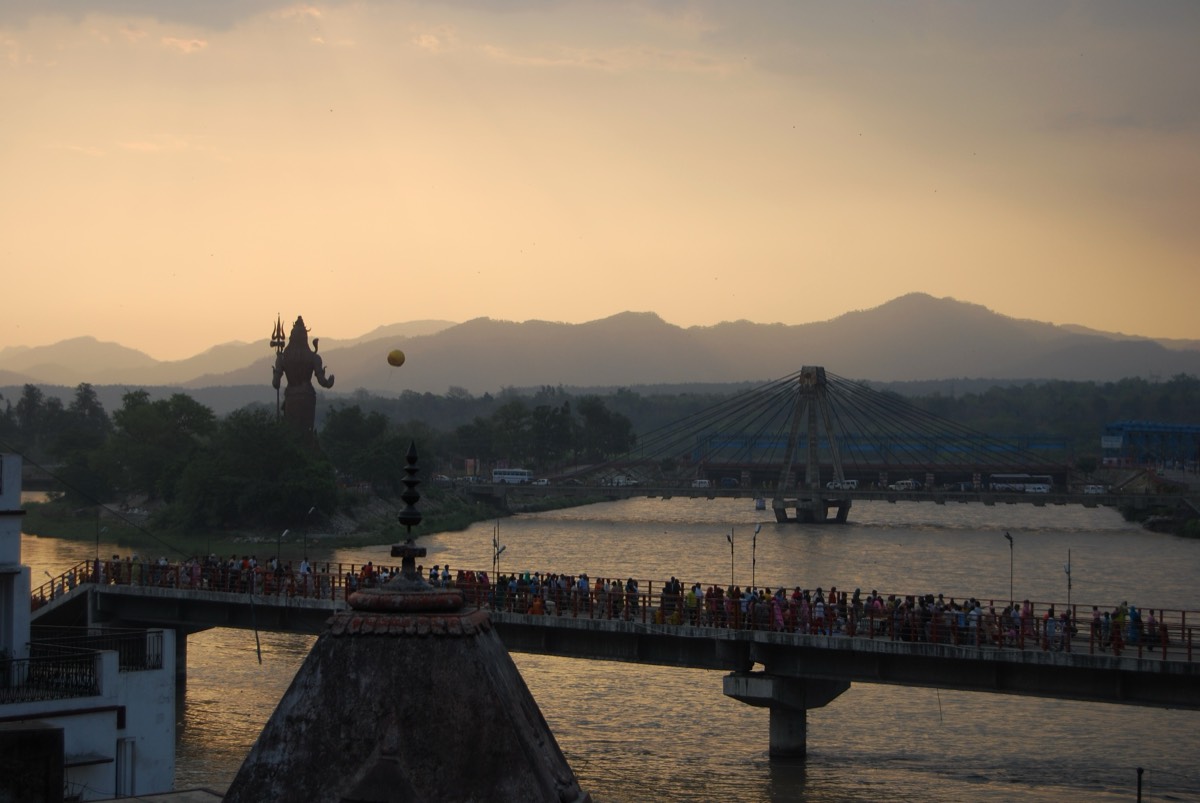
Rishikesh — known also as Hṛṣīkeśa, the city of the “Master of the Senses” — occupies a singular position in the Hindu sacred landscape. Nestled in the foothills of the Garhwal Himālayas in present-day Uttarakhand, at an elevation of approximately 372 metres above sea level, it stands at the precise point where the holy Gaṅgā emerges from the mountains and begins her journey across the vast northern Indian plains. This geographical threshold — between the wild, ascetic solitude of the high Himālayas and the settled, ritual world of the plains — has made Rishikesh a natural meeting place of heaven and earth, a site where sages, yogis, and seekers have gathered since time immemorial.
The city’s name derives from the Sanskrit compound hṛṣīka (“senses”) and īśa (“lord” or “master”), meaning “Lord of the Senses” — an epithet of Lord Viṣṇu. According to the Skanda Purāṇa (Kedārakhaṇḍa, chapters 115-120), the great sage Raibhya performed severe austerities (tapas) on the banks of the Gaṅgā at this very spot, conquering his senses completely. Pleased by his devotion, Lord Viṣṇu manifested before him under a mango tree, declaring: “Since you have conquered your senses through supreme tapasyā, let this place be known as Hṛṣīkeśa.” The Purāṇa refers to this sacred grove as Kubjāmraka, the “Crooked Mango Tree,” where the divine manifestation occurred.
Mythological and Scriptural Heritage
Lord Rāma’s Penance
The Skanda Purāṇa further records that Lord Rāma, after his victorious return from Laṅkā, performed penance (prāyaścitta) at Rishikesh to atone for the sin of killing Rāvaṇa, who, despite being a demon king, was a Brāhmaṇa by birth. This tradition links Rishikesh directly to the events of the Rāmāyaṇa and explains the presence of ancient temples dedicated to Rāma and his brothers in the oldest quarters of the city. The Kedārakhaṇḍa states that Rāma’s penance sanctified the banks of the Gaṅgā here, making the waters particularly potent for the washing away of sins (Skanda Purāṇa, Kedārakhaṇḍa 117.15-20).
Lakṣmaṇa’s Crossing
According to local tradition preserved in the Kedārakhaṇḍa, Lakṣmaṇa, the devoted younger brother of Rāma, crossed the Gaṅgā at the point where the famous Lakshman Jhūlā suspension bridge stands today. He is said to have traversed the river on two jute ropes, performing austerities on the opposite bank. This legend gave the crossing its ancient name and has made the Lakshman Jhūlā area one of the most spiritually charged sites in Rishikesh.
The Churning of the Ocean and Nīlakaṇṭha
The Nīlakaṇṭha Mahādeva Temple, situated approximately 32 kilometres from the city centre in the forested hills above Rishikesh, commemorates one of the most dramatic episodes in Hindu mythology. According to the Bhāgavata Purāṇa (8.7.18-46) and the Śiva Purāṇa, when the Devas and Asuras churned the cosmic ocean (Samudra Manthana) to obtain the nectar of immortality (amṛta), a deadly poison (hālāhala) emerged that threatened to destroy all of creation. Lord Śiva, moved by compassion, consumed the poison, which lodged in his throat, turning it blue. He thus earned the name Nīlakaṇṭha (“the Blue-Throated One”). The temple at Rishikesh is believed to mark the very spot where Śiva performed this act of cosmic self-sacrifice. The Kedārakhaṇḍa (118.30-35) identifies this location as particularly auspicious for the worship of Śiva in his Nīlakaṇṭha form.
Sacred Geography: The Gaṅgā at Rishikesh
The spiritual significance of Rishikesh is inseparable from its relationship with the Gaṅgā. At this point in her course, the river has just emerged from the narrow gorges of the Śivālik Hills and flows with exceptional clarity and force. The water here is cold, swift, and crystalline — qualities that Hindu tradition associates with spiritual purity and the direct grace of the river goddess.
The Viṣṇu Purāṇa (2.2.35) declares that the Gaṅgā, having descended from the heavens onto Lord Śiva’s matted locks and then flowed through the Himālayas, carries the accumulated sanctity of every sacred site she has touched. At Rishikesh, where she first greets the plains, this sanctity is considered to be at its most concentrated and accessible.
Triveni Ghāṭ
Triveni Ghāṭ, the most sacred bathing spot in Rishikesh, is located at the confluence (saṅgama) of three rivers: the Gaṅgā, the Chandrabhāgā, and a third subterranean stream identified in local tradition as the Yamunā. The concept of triveni — a triple confluence — holds deep theological significance in Hinduism, symbolizing the meeting of the three guṇas (sattva, rajas, and tamas) and the three paths to liberation (jñāna, bhakti, and karma). Bathing at a triveni is considered especially purifying.
Every evening, a grand Gaṅgā Āratī is performed at Triveni Ghāṭ, where priests offer worship to the river goddess with multi-tiered brass lamps, camphor flames, and Vedic chanting. This ceremony draws thousands of devotees and visitors, mirroring the famous āratī at Dashāshvamedha Ghāṭ in Vārāṇasī, though set against the dramatic backdrop of the Himālayan foothills.
Ancient Temples of Rishikesh
Bharat Mandir: The Oldest Temple
Bharat Mandir, dedicated to Lord Viṣṇu in his form as Hṛṣīkeśa Nārāyaṇa, is the oldest temple in Rishikesh. According to the Kedārakhaṇḍa (chapters 115-120), the original shrine was established in the Vedic period, though the present structure dates to the 8th century CE, when Ādi Śaṅkarācārya renovated and consecrated it during his great tour of India to revive Sanātana Dharma. The temple houses a Śālagrāma image of Viṣṇu believed to be self-manifested (svayambhū).
Historical records indicate that the temple was severely damaged during the invasion of Timur in 1398 CE but was subsequently rebuilt. The Kedārakhaṇḍa accords the temple the status of a mahātīrtha (great pilgrimage site), declaring that darśana of Lord Hṛṣīkeśa Nārāyaṇa at this spot grants the same merit as performing an Aśvamedha Yajña (horse sacrifice).
Nīlakaṇṭha Mahādeva Temple
Perched at 1,330 metres above sea level in the dense forests above Rishikesh, the Nīlakaṇṭha Mahādeva Temple is one of the most revered Śiva temples in the region. The temple is built in a style influenced by Dravidian architecture, unusual for the Garhwal region, and houses a Śiva Liṅga that is ritually bathed with water, milk, and honey throughout the day. During the month of Śrāvaṇa (July-August), hundreds of thousands of Kāṃvariyas — devotees carrying holy Gaṅgā water on decorated shoulder poles — trek to this temple as part of their annual pilgrimage, making it one of the largest religious gatherings in Uttarakhand.
Shatrughna and Lakṣmaṇa Temples
Among the ancient temples attributed to the period of the Rāmāyaṇa are the Shatrughna Mandir and the Lakṣmaṇa Mandir, both situated along the riverbank. These temples commemorate the presence of Rāma’s brothers in Rishikesh during their period of exile and penance. Like Bharat Mandir, they were renovated by Ādi Śaṅkarācārya in the 8th century and remain active sites of worship.
The Yoga Capital of the World
Ancient Roots of Yoga in Rishikesh
Rishikesh’s association with yoga and meditation stretches back to the earliest layers of Hindu tradition. The Kaṭhopaniṣad (2.3.10-11), one of the principal Upaniṣads, describes the state of yoga as the “firm restraint of the senses” — precisely the spiritual achievement commemorated in the city’s very name, Hṛṣīkeśa. The Śvetāśvatara Upaniṣad (2.8-10), which contains some of the oldest systematic instructions on meditation posture and breath control, describes a practice environment remarkably similar to the forests of Rishikesh: a level, clean place, free of pebbles, fire, and gravel, pleasing to the mind by its sounds, water, and bowers.
For centuries, sādhus, sannyāsins, and yogis have retreated to the forests around Rishikesh to practise austerities. The caves along the Gaṅgā between Rishikesh and Devaprayāg are dotted with meditation spots associated with historical and legendary ascetics. The tradition of guru-śiṣya (teacher-disciple) transmission of yoga knowledge has flourished here without interruption.
The Modern Yoga Renaissance
The transformation of Rishikesh from a traditional pilgrimage town into the globally recognized “Yoga Capital of the World” began in the early 20th century. In 1936, Svāmī Śivānanda Sarasvatī (1887-1963), a physician-turned-renunciant, established the Divine Life Society and the Śivānanda Āśrama on the banks of the Gaṅgā near Rishikesh. His prolific writings on yoga, Vedānta, and practical spirituality — over 200 books — introduced systematic yoga practice to a worldwide audience and trained generations of teachers who spread across the globe.
In 1968, Rishikesh gained international fame when the Beatles visited the āśrama of Maharṣi Maheśa Yogī near Rishikesh to study Transcendental Meditation. This visit brought global media attention to the city and catalyzed a wave of Western interest in yoga and Indian spirituality that continues to the present day.
Since 1999, the annual International Yoga Festival, held on the banks of the Gaṅgā during the first week of March, has attracted practitioners from over 100 countries, firmly establishing Rishikesh’s identity as the world capital of yoga. In 2015, the Government of India officially designated Rishikesh as the “Yoga Capital of the World.”
Gateway to the Char Dhām
Rishikesh serves as the traditional starting point for the Char Dhām Yātrā, the pilgrimage to the four sacred abodes in the Garhwal Himālayas: Badrīnāth (dedicated to Viṣṇu), Kedārnāth (dedicated to Śiva), Gaṅgotrī (source of the Gaṅgā), and Yamunōtrī (source of the Yamunā). This circuit, formalized by Ādi Śaṅkarācārya in the 8th century, is considered one of the holiest pilgrimages in Hinduism.
The Kedārakhaṇḍa of the Skanda Purāṇa (chapters 1-10) describes the Char Dhām circuit as encompassing the entire spiritual geography of the Himālayas, with each dhām representing one of the four aims of human life (puruṣārtha): dharma (righteousness), artha (prosperity), kāma (desire), and mokṣa (liberation). Rishikesh, as the gateway to this circuit, is the place where pilgrims traditionally purify themselves in the Gaṅgā and seek blessings before ascending into the mountains.
The Lakshman Jhūlā and Rām Jhūlā
The two iconic suspension bridges spanning the Gaṅgā at Rishikesh — Lakshman Jhūlā and Rām Jhūlā — are both engineering marvels and sacred landmarks. The original Lakshman Jhūlā, a rope bridge, was replaced by an iron suspension bridge in 1929. Spanning approximately 137 metres across the river, it connected the two banks at a point where the Gaṅgā flows with great force between rocky cliffs. Due to structural concerns, the bridge was closed to foot traffic in 2020, and a new bridge has been constructed nearby.
Rām Jhūlā, constructed in 1986, is a similar suspension bridge located approximately 3 kilometres upstream, connecting the Śivānanda Āśrama area with the Svargāśrama area on the opposite bank. Both bridges have become symbols of Rishikesh and are flanked by multi-storey temples, āśramas, and meditation centres.
Major Festivals and Observances
International Yoga Festival
Held annually in the first week of March, this week-long festival brings together yoga masters from various traditions for workshops, lectures, and practice sessions on the banks of the Gaṅgā. It has become one of the largest yoga gatherings in the world.
Kāṃvariya Yātrā (Śrāvaṇa)
During the month of Śrāvaṇa (July-August), millions of Śiva devotees known as Kāṃvariyas undertake a pilgrimage from Haridvār to Nīlakaṇṭha Mahādeva Temple via Rishikesh, carrying holy Gaṅgā water in decorated pots (kāṃvars) slung over their shoulders. This is one of the largest annual religious gatherings in India, with the road from Haridvār through Rishikesh becoming a continuous river of saffron-clad devotees.
Gaṅgā Daśaharā and Gaṅgā Āratī
Gaṅgā Daśaharā, the ten-day celebration of the descent of the Gaṅgā to earth, is observed with particular devotion in Rishikesh. The daily Gaṅgā Āratī at Triveni Ghāṭ, while not a festival per se, is a perpetual ceremony that constitutes the spiritual heartbeat of the city, performed every evening without interruption.
Āśramas and Spiritual Institutions
Rishikesh is home to hundreds of āśramas representing diverse traditions within Hinduism. Among the most renowned are:
- Śivānanda Āśrama (Divine Life Society): Founded by Svāmī Śivānanda in 1936, it remains one of the world’s most influential centres for the study and practice of yoga and Vedānta.
- Paramārtha Niketan: One of the largest āśramas in Rishikesh, situated directly on the Gaṅgā, hosting the evening Gaṅgā Āratī and the annual International Yoga Festival.
- Svargāśrama: A cluster of āśramas and temples on the eastern bank of the Gaṅgā, accessible via Rām Jhūlā, known for its serene atmosphere and traditional Vedic learning.
- Maharṣi Maheśa Yogī Āśrama: The now-abandoned ashram where the Beatles stayed in 1968, known locally as “Beatles Ashram,” has become a cultural landmark and is now part of Rajaji National Park.
Conclusion: The Eternal Threshold
Rishikesh endures as a living threshold — between mountains and plains, between the ascetic ideal and the householder’s world, between ancient tradition and modern global culture. The city where Viṣṇu appeared as the “Master of the Senses” to a meditating sage continues to call seekers from every corner of the world. As the Gaṅgā flows ceaselessly from the Himālayas through this sacred city, she carries with her the promise that is the essence of Rishikesh: that the senses can be mastered, the self can be known, and the divine is accessible to all who seek with sincerity. As the Skanda Purāṇa declares, “He who bathes in the Gaṅgā at Hṛṣīkeśa and worships Lord Nārāyaṇa is freed from the bonds of saṃsāra” (Kedārakhaṇḍa 119.25).