Introduction: The Saint Who Belonged to No Religion and All Religions
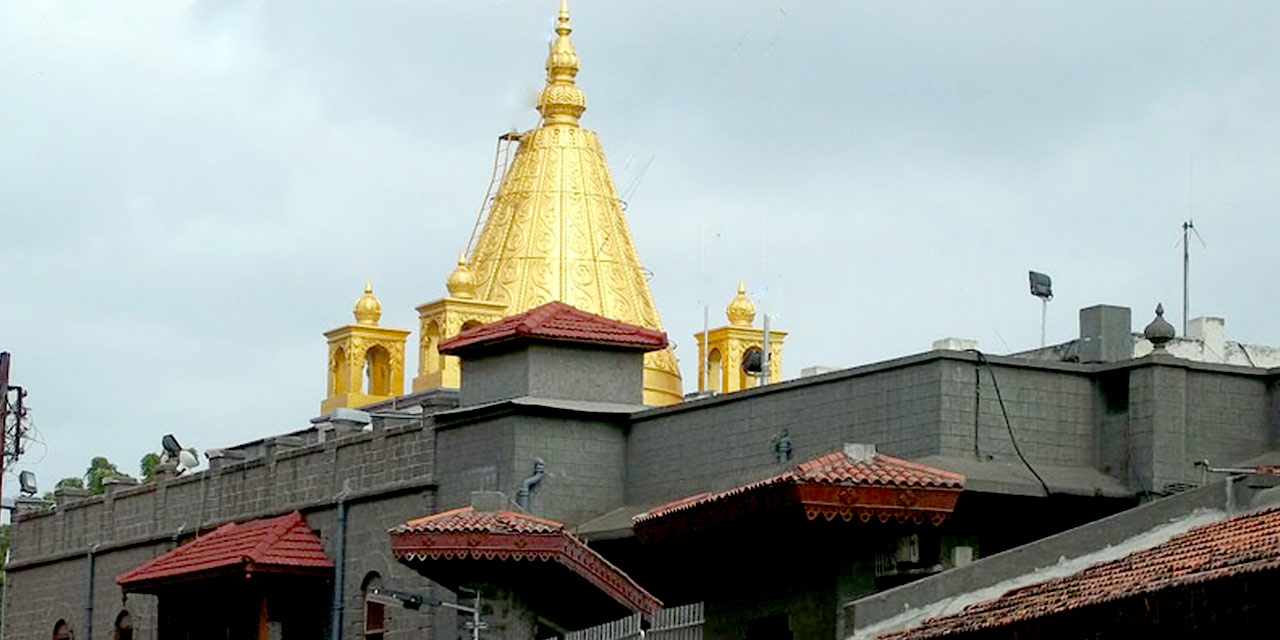
In the small town of Shirdi, nestled in the Ahmednagar district of Maharashtra, stands one of the most visited pilgrimage centres in India — the Shri Sai Baba Samādhi Mandir. This temple complex, which receives an estimated 25,000 to 30,000 pilgrims daily (swelling to over 100,000 on festivals), enshrines the mortal remains of a mysterious saint who arrived in the village as an unnamed fakir in the mid-nineteenth century and departed in 1918, leaving behind a spiritual legacy that continues to transform millions of lives.
Sai Baba of Shirdi — whose very name “Sai” is derived from the Persian/Arabic word meaning “holy one” or “saint,” bestowed upon him by the local priest Mahālsāpati when the young wanderer first arrived — defies conventional religious categorization. He lived in a dilapidated mosque he called Dvārakāmāī, kept a perpetual sacred fire (dhunī) burning, quoted from both the Qurʾān and the Bhagavad Gītā, and distilled his entire teaching into one luminous declaration: “Sabkā Mālik Ek” — “The Lord of all is One” (Shri Sai Satcharita, Chapter 3).
The Life of Sai Baba: An Enigma Wrapped in Grace
The Mysterious Arrival
The biographical details of Sai Baba’s early life remain shrouded in mystery — deliberately so, scholars believe, as the saint consistently refused to disclose his parentage, birthplace, or original name. The most authoritative account of his life, the Shri Sai Satcharita composed by Govind Raghunāth Dābholkar (known as Hemādpant) between 1922 and 1929, records that Sai Baba first appeared in Shirdi as a youth of about sixteen, sitting in meditation under a neem tree. The villagers were astonished to see a young fakir enduring severe austerities in the open. He disappeared after approximately three years and returned around 1858, this time permanently, accompanying a marriage procession.
Upon his return, the temple priest Mahālsāpati greeted him with the words “Āo Sai” (“Welcome, holy one”), and the name remained. Sai Baba took up residence in a crumbling mosque at the edge of the village, which he named Dvārakāmāī — a name combining the Hindu sacred city of Dvārakā with the Islamic term “māī” (mother), symbolizing the unity of faiths that defined his entire mission (Shri Sai Satcharita, Chapter 5).
Teachings and Philosophy
Sai Baba left no written texts, but his oral teachings, parables, and actions — meticulously recorded by Dābholkar and other devotees — reveal a coherent spiritual philosophy rooted in:
Sabkā Mālik Ek (The Lord of All is One): This was Sai Baba’s foundational teaching. He insisted that Allāh, Rāma, Hari, and every name of the Divine referred to one supreme reality. He would tell Hindu devotees to read the Qurʾān and Muslim devotees to chant Rāma’s name, not to confuse them, but to dissolve the walls of sectarian identity (Shri Sai Satcharita, Chapter 3).
Shraddhā and Saburī (Faith and Patience): Sai Baba identified these twin virtues as the complete path to God-realization. Shraddhā (faith) meant unwavering trust in the Guru and the Divine; Saburī (patience, from the Arabic/Urdu ṣabr) meant endurance through life’s trials without losing that faith (Shri Sai Satcharita, Chapter 19).
Dākṣiṇā (The Offering): Sai Baba regularly asked visitors for dākṣiṇā (monetary offering), not for personal use — he redistributed everything he received by the end of each day — but as a spiritual exercise in detachment. By asking specific amounts from specific individuals, he taught the lesson that wealth must flow, not stagnate (Shri Sai Satcharita, Chapter 14).
Service to the Living: Sai Baba taught that serving the poor and the suffering was the highest worship. He personally tended to lepers, ground wheat to ward off a cholera epidemic (in an act devotees consider miraculous), and declared: “He who feeds the hungry, serves Me” (Shri Sai Satcharita, Chapter 9).
Miracles and Grace
The Shri Sai Satcharita records numerous miracles attributed to Sai Baba: lighting oil lamps with water when the village oil merchants refused him oil (Chapter 5), saving devotees from fires and snakebites across great distances (Chapter 34), curing incurable diseases (Chapter 7), and appearing simultaneously in multiple locations (Chapter 38). While sceptics regard these as hagiographic embellishment, for devotees they are expressions of a saint’s compassion transcending the laws of ordinary reality.
Mahāsamādhi
On October 15, 1918 (Vijayadaśamī day), Sai Baba left his mortal body. His last words, as recorded by those present, were addressed to a devotee: “I am going. Take Me to the Wāḍā (Būṭī Wāḍā). Place Me there. My tomb will speak and move with those who make Me their sole refuge” (Shri Sai Satcharita, Chapter 43). His body was interred in the Būṭī Wāḍā, a stone building that a wealthy devotee, Gopalrāo Būṭī, had been constructing as a temple for Lord Kṛṣṇa at Sai Baba’s own instruction. The incomplete Kṛṣṇa temple thus became the Samādhi Mandir.
The Samādhi Mandir: Architecture and Sacred Spaces
The Main Shrine
The Shri Sai Baba Samādhi Mandir is the spiritual heart of Shirdi. The original Būṭī Wāḍā structure has been extensively renovated and expanded by the Shri Sāībābā Sansthān Trust. The central sanctum houses a magnificent Italian marble statue of Sai Baba, sculpted by Bālājī Vāsant in 1954, seated on a stone throne in his characteristic posture with his right leg crossed over his left knee. Beneath this statue lies the actual samādhi (burial vault) containing Sai Baba’s mortal remains.
The mandir features a spacious pillared hall (sabhā maṇḍapa) adorned with intricate marble work, where devotees sit in meditation and prayer. Silver doors lead into the inner sanctum, and the entire complex is maintained with meticulous care, reflecting the immense resources of the Sansthān Trust.
Dvārakāmāī: The Sacred Mosque
Adjacent to the Samādhi Mandir stands Dvārakāmāī, the small mosque where Sai Baba lived for most of his time in Shirdi. Now preserved as a shrine, it houses several objects of deep veneration:
- The Dhunī (Sacred Fire): The perpetual fire that Sai Baba maintained throughout his life still burns in Dvārakāmāī. Devotees collect the sacred ash (udi) from this fire as prasād, believing it carries healing and protective power. Sai Baba would apply this udi to the foreheads of visitors as a blessing (Shri Sai Satcharita, Chapter 33).
- The Grinding Stone: The stone with which Sai Baba famously ground wheat to create a boundary of protection around Shirdi during a cholera epidemic.
- The Oil Painting: A large portrait of Sai Baba painted during his lifetime sits in a prominent position.
Chāvaḍī: The Night Shelter
The Chāvaḍī, a simple structure near Dvārakāmāī, is where Sai Baba slept on alternate nights. Every alternate evening, devotees would conduct a grand procession (pālkhī) carrying Sai Baba from Dvārakāmāī to the Chāvaḍī. This procession is reenacted every Thursday night and remains one of the most emotionally charged rituals in Shirdi.
The Neem Tree (Gurusthan)
The spot beneath the neem tree where the young Sai Baba was first seen meditating is preserved as the Gurusthan (seat of the Guru). Remarkably, the neem tree’s leaves are said to have tasted sweet rather than bitter — a miracle attributed to Sai Baba’s spiritual presence (Shri Sai Satcharita, Chapter 5). A small shrine now marks this location.
The Syncretic Tradition: Hindu-Muslim Unity in Practice
A Living Bridge Between Faiths
What makes Shirdi unique among Indian pilgrimage centres is its organic, lived syncretism. Sai Baba did not merely preach interfaith harmony — he embodied it. He wore a kafnī (a long Muslim robe) and tied a cloth around his head like a Sufi fakir, yet he allowed Hindu worship including āratī, abhiṣeka, and the application of sandal paste to his person. He celebrated both Hindu and Muslim festivals. He referred to God interchangeably as “Allāh Mālik” and “Hari,” and his two most famous sayings — “Sabkā Mālik Ek” and “Allāh Mālik” — weave together the Sanskritic and Islamicate spiritual vocabularies of India.
Scholar Marianne Warren, in her detailed study Unravelling the Enigma (1999), situates Sai Baba within the Sufi tradition of the Chishṭī order while acknowledging the profoundly Hindu elements of his practice. Other scholars, such as Antonio Ferraiuolo, argue that Sai Baba transcended both traditions, creating a unique spiritual space that cannot be reduced to either Islam or Hinduism.
The Dhunī: Where Fire Worship Meets Sufi Practice
The dhunī (sacred fire) in Dvārakāmāī is perhaps the most potent symbol of this synthesis. In Hindu tradition, fire (agni) is the divine intermediary between humans and gods, central to Vedic yajña. In Sufi practice, the perpetual fire of a dargāh (Sufi shrine) represents divine light (nūr). Sai Baba’s dhunī serves both functions simultaneously, and the udi distributed from it is venerated by Hindus and Muslims alike.
The Shri Sāībābā Sansthān Trust
The Shri Sāībābā Sansthān Trust, established in 1922 (four years after Sai Baba’s mahāsamādhi), administers the temple complex and its extensive charitable activities. It is one of the wealthiest religious trusts in India, receiving donations estimated at several hundred crore rupees annually. The Trust operates:
- Free and subsidized accommodation for pilgrims (over 10,000 beds)
- A large prasādālaya (dining hall) serving free meals to thousands daily
- Hospitals and medical facilities
- Educational institutions
- Infrastructure for crowd management during peak pilgrimages
The Trust has transformed Shirdi from a small village into a thriving pilgrimage town with modern amenities, including a dedicated airport (Shirdi Airport, opened 2017) and extensive rail and road connectivity.
Pilgrimage Practices and Rituals
Daily Rituals
The Samādhi Mandir follows a rigorous daily schedule of rituals:
- Kākāḍa Āratī (4:15 AM): The dawn āratī, performed with camphor and oil lamps
- Madhyāhna Āratī (12:00 PM): The midday worship
- Dhūpa Āratī (Sunset): The evening incense ceremony
- Śejā Āratī (10:30 PM): The night āratī, putting Sai Baba to rest
Each āratī is accompanied by devotional songs composed by Sai Baba’s early devotees, including the famous “Āratī Sai Bābā” composed by Mādhav Adkar.
Thursday: Sai Baba’s Sacred Day
Thursday (Guruvār) holds special significance as Sai Baba’s day. Devotees observe fasts, visit the temple, and participate in the evening Chāvaḍī procession. The crowd on Thursdays typically doubles or triples the daily average.
Major Festivals
- Rāma Navarātrī (March/April): Nine-day celebration with special pūjās
- Guru Pūrṇimā (July): Celebrated as Sai Baba’s sacred day par excellence
- Vijayadaśamī (October): The anniversary of Sai Baba’s mahāsamādhi, observed with elaborate ceremonies
- Sai Baba’s Puṇyatithi: The death anniversary draws the largest crowds of the year
Udi Prasād
The most characteristic practice at Shirdi is receiving udi (sacred ash) from the dhunī fire. Devotees apply it to the forehead, dissolve it in water to drink, or carry it home as a protective talisman. Sai Baba himself distributed udi to every visitor, declaring it to be a remedy for all afflictions — physical, mental, and spiritual.
Shirdi in the Wider Sai Tradition
Sai Baba of Shirdi has become one of the most widely venerated saints in India and the Indian diaspora. Sai temples exist in virtually every Indian city and in many countries worldwide. The Shirdi Sai movement is notably non-sectarian: devotees include Hindus, Muslims, Christians, Sikhs, Parsis, and people of no particular religious affiliation. This universality fulfills Sai Baba’s own vision, recorded in the Shri Sai Satcharita: “Whoever comes to Me with faith, regardless of caste or creed, I will guide and protect them” (Chapter 32).
The town of Shirdi itself has become a model of interfaith coexistence. The annual Urs (Islamic commemorative ceremony) of Sai Baba is celebrated alongside Hindu festivals, and the Dvārakāmāī mosque-shrine is worshipped by devotees of all backgrounds with equal reverence.
Conclusion: The Eternal Dhunī
Shirdi stands as living testimony to a simple yet revolutionary truth: that the deepest spiritual realization dissolves all divisions of creed, caste, and community. The sacred fire that Sai Baba lit in Dvārakāmāī over a century ago continues to burn, and the udi it produces continues to be distributed to millions who seek healing, hope, and the direct experience of divine grace. As Sai Baba promised his devotees: “I shall be active and vigorous even from My tomb. My mortal remains will speak from My tomb” (Shri Sai Satcharita, Chapter 25). For the countless pilgrims who stream into Shirdi each day, that promise remains vibrantly alive.