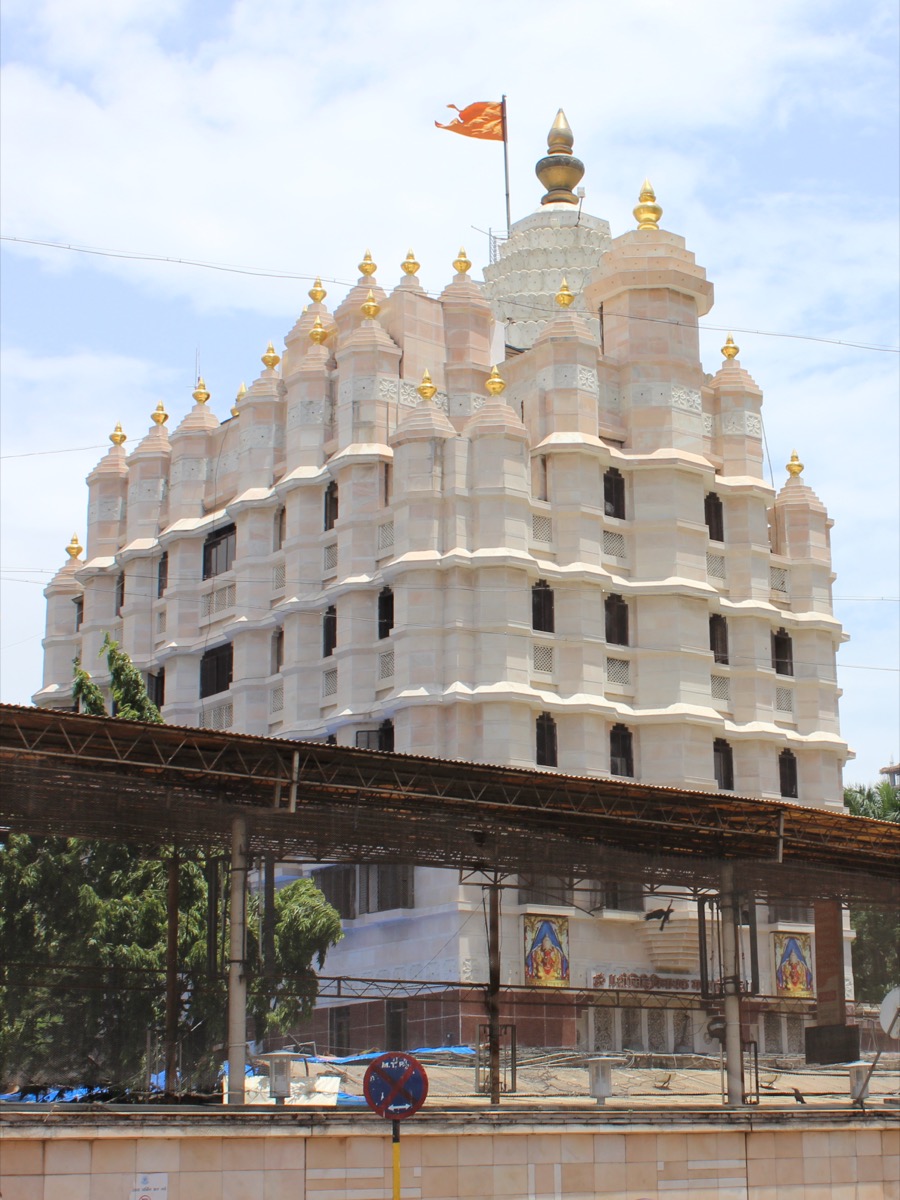
The Shree Siddhivinayak Ganapati Mandir, nestled in the bustling Prabhadevi neighbourhood of Mumbai, is arguably the most visited Ganesha temple in all of India. Every day, over 20,000 devotees pass through its gates, and on auspicious Tuesdays, that number swells to over 100,000. From Bollywood superstars launching their film careers to ordinary families seeking the Lord of Beginnings’ blessings for a new venture, Siddhivinayak occupies a singular place in the devotional heart of modern India. Yet behind its glittering gold dome and celebrity patronage lies a story that begins with a childless woman’s faith in 1801.
The Founding: Laxman Vithu and Deubai Patil (1801)
The temple was first consecrated on Thursday, 19 November 1801, according to government records preserved by the Shree Siddhivinayak Ganapati Mandir Trust. The construction was carried out by a local contractor named Laxman Vithu Patil, and the project was funded by Deubai Patil, a wealthy Agri community woman who had never been blessed with children.
Deubai’s motivation was poignant and selfless. Having endured the sorrow of childlessness herself, she wished to build a temple where Lord Ganesha — revered in the Mudgala Purāna and Ganesha Purāna as the remover of obstacles and grantor of wishes — might bestow the blessing of progeny upon other infertile couples. The original structure was a modest brick shrine, small enough that it could easily be overlooked by a passerby on the dirt road connecting Prabhadevi to Worli.
At its heart stood the deity that would make this temple famous across the subcontinent: a black stone mūrti of Shree Siddhivinayak, carved from a single piece of stone, two and a half feet wide, with a feature so rare in Ganesha iconography that it would become the temple’s defining identity.
The Right-Trunk Mūrti: Iconographic Significance
The overwhelming majority of Ganesha idols across India depict the deity with his trunk curving to the left — the Vāmāvarta form, associated with material prosperity, domestic well-being, and the Ida Nādi (the lunar energy channel). The Siddhivinayak mūrti, however, belongs to the exceedingly rare Dakshināvarta (right-turning) tradition. Here, the trunk curves gracefully to the right, aligning with the Pingalā Nādi — the solar energy channel associated with spiritual power, rigorous discipline, and the pursuit of moksha (liberation).
According to traditional belief codified in texts like the Ganesha Purāna (Upāsanā Khanda), a right-trunk Ganesha is called Siddhi Vināyaka — literally, “Ganesha who grants Siddhis (spiritual accomplishments).” The worship of this form is considered more demanding; devotees believe that the Dakshināvarta Ganapati responds powerfully to sincere prayer but requires strict adherence to ritual purity. This is one reason why the Siddhi form is rarely installed in homes and is more commonly found in formally consecrated temples.
The Chaturbhuja (four-armed) mūrti holds four sacred objects:
- Upper right hand: A lotus (padma), symbol of purity and spiritual unfolding
- Upper left hand: A small axe (parashu), representing the cutting of attachments
- Lower right hand: A garland of holy beads (japamālā), signifying meditation and devotion
- Lower left hand: A bowl of modaks (modakapātra), Ganesha’s beloved sweet, symbolising the sweetness of the realised inner self
On the deity’s forehead is etched a third eye, reminiscent of Lord Shiva’s own tṛtīya netra, signifying the power of supreme knowledge and destruction of ignorance. Flanking the central figure are the goddesses Riddhi (prosperity) and Siddhi (spiritual attainment) — Ganesha’s two consorts according to the Shiva Purāna — reinforcing the temple’s promise that both worldly success and spiritual liberation are within the devotee’s reach.
A Temple Transformed: From Modest Shrine to Golden Edifice
For nearly two centuries, the Siddhivinayak temple remained a small, unassuming structure. Its fame grew gradually through word of mouth — stories of wishes fulfilled, obstacles removed, and prayers answered spreading through Mumbai’s communities.
The 1952 Hanuman Discovery
In 1952, during road-widening work near the temple, workers unearthed a Hanuman idol buried in the earth. Devotees considered this an auspicious sign, and a small Hanuman shrine was subsequently constructed adjacent to the main temple. Local tradition also holds that the revered guru Acchambit Jambhekar Maharaj (also known as Ramakrishna Maharaj) buried two sacred idols near the main shrine during the nineteenth century. A Mandar tree that grew at that very spot reportedly bore the image of a svayambhū (self-manifested) Ganesha on its branches, further cementing the site’s sacred reputation.
The 1990 Grand Renovation
The transformation from a humble two-century-old shrine into the magnificent temple visible today occurred through a major renovation completed in 1990, at a cost of approximately three crore rupees (roughly $1 million at the time). The renowned Mumbai architect Sharad Athale designed the new structure, drawing inspiration from the ancient Ambarnath Shiva Temple — a masterpiece of eleventh-century Hemādpanthi stone architecture in the Thane district.
The renovated Siddhivinayak temple is a striking six-storey structure clad in fine marble and pink granite. Its most iconic feature is the gold-plated central dome (kalasha), crowned by a golden pinnacle and surrounded by 37 smaller gilded domes, creating a luminous skyline that catches the light of the setting sun over the Arabian Sea. The spires are adorned with Panchdhātu (five-metal alloy: gold, silver, copper, zinc, and iron) crowns — a traditional material believed to channel cosmic energy.
Three principal entrances, each measuring 13 feet in height, lead devotees into the temple interior. The wooden doors at these entrances are masterpieces of Maharashtrian wood-carving, depicting the Ashtavinayak — the eight manifestations of Ganesha venerated across Maharashtra — connecting the Mumbai temple to the broader Ganapati devotional landscape of the region.
The Ashtavinayak Connection
The Ashtavinayak are eight ancient, self-manifested Ganesha temples scattered across the Pune district and neighbouring regions of Maharashtra. Each temple houses a svayambhū mūrti with a unique form and legend:
- Morgaon — Moreshwar (peacock-riding Ganesha)
- Siddhatek — Siddhivinayak (the original Siddhivinayak, distinct from Mumbai’s)
- Pali — Ballaleshwar
- Mahad — Varadavinayak
- Theur — Chintamani
- Lenyadri — Girijatmaj (cave temple)
- Ozar — Vighnahar
- Ranjangaon — Mahāganapati
The Siddhivinayak Temple at Siddhatek (Ahmednagar district) is one of the eight Ashtavinayak temples and should not be confused with Mumbai’s Siddhivinayak, though both share the name “Siddhivinayak” (Ganesha who grants Siddhis). The Mumbai temple, while not part of the Ashtavinayak circuit, pays homage to this tradition through the exquisitely carved Ashtavinayak panels on its wooden doors. Many pilgrims who undertake the Ashtavinayak yātrā also include a visit to the Mumbai Siddhivinayak as an additional devotional stop, creating an informal but deeply felt link between the temples.
The Sacred Tuesday: Mangalvār Darshan
Tuesday (Mangalvār) holds special significance in the Siddhivinayak tradition. In Hindu astrology, Tuesday is governed by Mars (Mangal graha), and Lord Ganesha is believed to be particularly receptive to prayers offered on this day. The Mudgala Purāna (2.38) describes Ganesha as Vighna-Rāja, the sovereign lord over obstacles, whose grace is especially potent when invoked at the start of the week’s most active energy cycle.
On an ordinary weekday, the temple opens at 5:30 a.m. and closes around midnight. But on Tuesdays, the schedule extends dramatically — the temple opens at 3:15 a.m. and remains open until 12:30 a.m. the following day, operating for nearly 21 hours straight. The queue of devotees can stretch for up to two kilometres through the streets of Prabhadevi, with waiting times of three to four hours not uncommon.
The Tuesday abhisheka (ritual bathing of the mūrti) is performed with particular grandeur, using milk, honey, sandalwood paste, and sacred water. Devotees bring offerings of modaks, red flowers (jāsvandī or hibiscus, sacred to Ganesha), coconuts, and dūrvā grass. The collective chanting of “Ganapati Bappa Morya, Puḍhchyā Varshī Laukarīyā” (O Father Ganapati, come again early next year) echoes through the temple complex, blending individual prayer with communal devotion.
Trust Administration: The 1980 Act
The temple’s meteoric growth in fame and donations during the twentieth century necessitated formal governance. In 1980, the Maharashtra state government passed the Shree Siddhivinayak Ganpati Temple (Trust) Act, placing the temple under the control of a government-administered body called the Shree Siddhivinayak Ganapati Mandir Trust.
The Trust operates as a body corporate with perpetual succession, managed by a Committee of Management comprising a Chairman, a Treasurer, and trustees appointed by the state government through notification in the Official Gazette. Originally, the committee was capped at eleven members — a Chairman, Treasurer, and up to nine additional trustees. In December 2024, the Maharashtra Legislative Council passed a bill expanding the committee to fifteen trustees, reflecting the temple’s growing operational complexity.
The Trust manages an annual income estimated at 100 to 150 crore rupees (approximately $12-18 million), derived from devotee donations, hundi (donation box) collections, and offerings of gold and jewellery. These funds are allocated toward:
- Daily pūjā rituals, ceremonies, and festival celebrations
- Maintenance of temple property and infrastructure
- Medical, educational, and social welfare programmes for the community
- Facilities for visiting devotees, including free meals (prasādam) and accommodation assistance
The Trust also operates live darshan streaming, online pūjā booking, and a mobile application, making the temple accessible to devotees across the globe.
Ganesh Chaturthi at Siddhivinayak
The annual Ganesh Chaturthi festival, typically falling in August or September, transforms the Siddhivinayak temple into the epicentre of Mumbai’s most beloved celebration. The festival commemorates the birth of Lord Ganesha according to the Ganesha Purāna and the Vāmana Purāna, and Mumbai’s observance — initiated in its modern public form by Lokmānya Bal Gangādhar Tilak in 1893 as a vehicle for social unity — is the largest in the world.
At Siddhivinayak, the ten-day festival (Ganeshotsava) features:
- Pranapratishthā (installation ceremony) on Chaturthi day with elaborate Vedic rituals
- Daily mahā-ārati with hundreds of lamps, accompanied by dhol-tāshā drumming groups
- Special abhisheka with pañchāmṛta (five nectars: milk, yoghurt, ghee, honey, and sugar)
- Thousands of kilograms of modak and laddoo distributed as prasādam
- Cultural programmes including devotional music (bhajan-kīrtan) and classical dance
The temple’s Ganesh Chaturthi celebrations draw national media attention, and the visarjan (immersion procession) on Anant Chaturdashī — the fourteenth day — is watched by millions. However, the temple’s own mūrti is permanent and is never immersed; instead, specially consecrated clay idols are used for the immersion ritual.
Celebrity Devotees and Cultural Significance
Siddhivinayak’s reputation as a wish-fulfilling temple (navasāchā Ganapati) — a Ganapati who answers vows — has drawn an extraordinary cross-section of Indian society. The temple occupies a unique cultural position in Mumbai, functioning as much as a civic institution as a religious one.
Bollywood has a particularly deep connection with the temple. It is customary for film producers to offer prayers at Siddhivinayak before a major release, and for actors to seek blessings before commencing new projects. When Sanjay Dutt was released from prison on 25 February 2016, the temple was among the first places he visited upon returning to Mumbai. Apple CEO Tim Cook offered morning prayers at the temple during his 2012 visit to India, marking its significance beyond Hindu devotion.
Politicians, business magnates, cricketers, and ordinary citizens queue together in the Siddhivinayak darshan line — a rare democratising space in a city defined by sharp social stratification. The temple’s culture reflects the broader Ganapati devotion of Maharashtra, where Ganesha is not merely a deity to be worshipped but a beloved family member whose arrival is celebrated and whose departure is mourned with genuine tears.
Architecture and Sacred Geography
The current temple structure, while modern in construction, draws deeply from Maharashtra’s rich temple-building traditions. The Hemādpanthi architectural influence — named after the thirteenth-century Yādava prime minister Hemādri who codified this stone-building technique — is visible in the temple’s robust stone base and geometric precision.
The temple’s location in Prabhadevi is itself significant. The neighbourhood’s name derives from the Prabhadevi Temple dedicated to Goddess Prabhadevi (a form of Durgā), making the area a confluence of Shakti and Ganapati worship. The proximity to the Arabian Sea links the site to Mumbai’s maritime identity and the ancient tradition of coastal tīrthas.
The inner sanctum (garbhagṛha) retains the intimacy of the original 1801 shrine despite the expansion around it. The gold-plated inner roof of the sanctum creates a luminous canopy over the mūrti, while the surrounding corridors allow for pradakshina (circumambulation). The temple complex also includes a small Hanuman shrine, flower and offering shops, and administrative offices of the Trust.
Visiting Siddhivinayak: A Practical Guide
The temple is located on S. K. Bole Marg, Prabhadevi, Mumbai 400028, easily accessible by:
- Train: Dadar station (Western and Central lines), approximately 1 km walk
- Road: Well-connected by BEST bus routes and taxi/auto-rickshaw services
Darshan timings (weekdays): 5:30 a.m. to 10:00 p.m. (extended on Tuesdays and festival days). Paid darshan options are available for those who wish to avoid the general queue, with proceeds going to the Trust’s charitable activities.
The temple enforces a dress code appropriate to a place of worship. Mobile phones and cameras are not permitted inside the sanctum. Devotees are advised to carry their offerings in hand, as large bags are typically not allowed inside.
The Living Legacy
In a city that reinvents itself every decade, the Siddhivinayak temple is one of Mumbai’s few constants — a place where the nineteenth-century faith of a childless woman continues to bear fruit for millions. The rare right-trunk mūrti, the gold dome that catches the first light of dawn over the Arabian Sea, the Tuesday queues that transform Prabhadevi’s streets into a river of devotion — all of these are expressions of a living tradition that bridges the ancient Ganesha Purāna and the modern Indian metropolis.
As the Ganesha Purāna (1.46.2) declares: “Sarva-vighna-haram devam, sarva-vighna-vivarjitam” — “He is the god who removes all obstacles, and who is himself free from all obstacles.” For the millions who visit Siddhivinayak each year, that promise is not theology but experience — tested, trusted, and renewed with every Tuesday’s dawn.