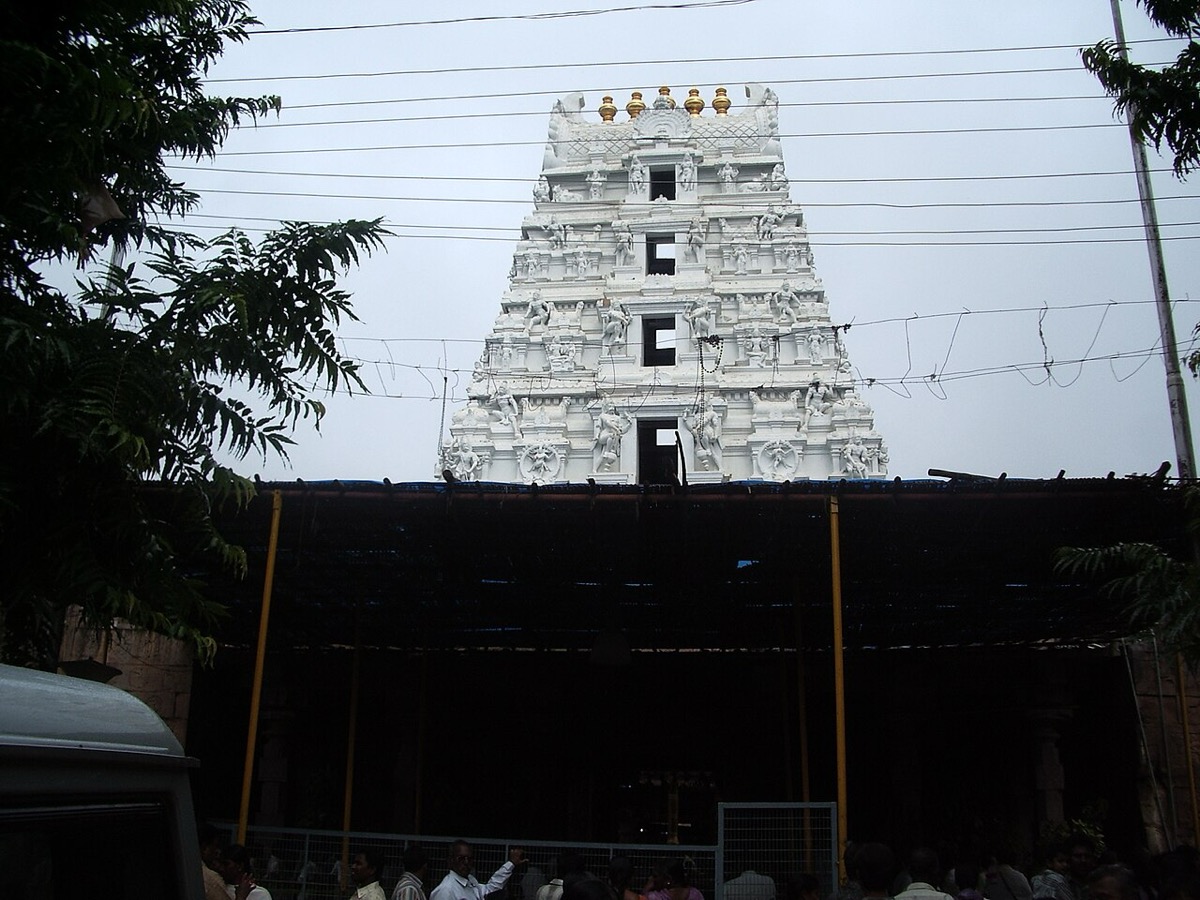
Introduction: Where Śiva and Śakti Dwell Together
Śrīśailam — the “auspicious mountain” (Śrī + Śaila) — rises from the dense forests of the Nallamala Hills in the Kurnool district of Andhra Pradesh, overlooking the deep gorge of the Krishna river. This ancient temple complex, dedicated to Lord Śiva as Mallikārjuna and Goddess Pārvatī as Bhramarāmbā, holds a distinction shared by no other site in southern India: it is simultaneously one of the twelve Jyotirliṅgas (the self-manifested liṅgas of supreme radiance) and one of the eighteen Mahā Śakti Pīṭhas (the seats of the Goddess’s supreme power).
The Skanda Purāṇa dedicates an entire section — the Śrī Śaila Khaṇḍa — to the glories of this mountain, declaring: “Of all the mountains in the world, Śrī Śaila is the most sacred. Merely seeing it from a distance, a person is freed from the cycle of rebirth” (Skanda Purāṇa, Śrī Śaila Khaṇḍa I.2). This extraordinary Purāṇic attention, spanning hundreds of chapters, testifies to the mountain’s centrality in the Śaiva sacred geography of the Indian subcontinent.
The temple sits at an elevation of approximately 457 metres (1,500 feet) above sea level, surrounded by the Nallamala forest — one of the largest stretches of undisturbed dry deciduous forest in India, now part of the Srisailam Tiger Reserve. The pilgrimage to Śrīśailam has thus always involved a journey through wilderness, a passage from the profane world into sacred space that the Skanda Purāṇa describes as itself meritorious.
Mythology and Legends
The Origin of the Name Mallikārjuna
The name Mallikārjuna combines “Mallikā” (jasmine) and “Arjuna” (a name of Śiva, meaning “the white/bright one”). The Skanda Purāṇa narrates the origin legend: when Lord Kārttikeya (Subrahmaṇya), aggrieved after losing a contest to his brother Gaṇeśa over who could circumambulate the universe first, departed in anger to dwell on Mount Krauñca, both Śiva and Pārvatī were distraught. They journeyed to Śrī Śaila to be near their son, and Śiva manifested as the Jyotirliṅga on the mountain. Pārvatī, taking the form of bees (bhramara) who cluster around jasmine flowers, became Bhramarāmbā, dwelling alongside her Lord.
Another tradition recorded in the Śrī Śaila Khaṇḍa (chapters 3-5) relates that a tribal princess named Mallikā (or Chandrāvatī), who was a devoted worshipper of Śiva, offered jasmine (mallikā) flowers daily to a natural liṅga on the mountain. Pleased with her devotion, Śiva revealed himself as Mallikārjuna — “Arjuna who is adorned with jasmine.”
The Jyotirliṅga Tradition
The Śiva Purāṇa (Koṭi Rudra Saṃhitā, chapters 14-33) enumerates the twelve Jyotirliṅgas, the self-manifested pillars of light through which Śiva revealed his supreme nature. Mallikārjuna at Śrīśailam is traditionally listed second:
“Saurāṣṭre Somanāthaṃ ca, Śrīśaile Mallikārjunam” — “At Saurashtra, Somnath; at Śrī Śaila, Mallikārjuna” (Śiva Purāṇa, Koṭi Rudra Saṃhitā 12.7).
The Jyotirliṅga tradition holds that each of these twelve sites marks a place where Śiva appeared as an infinite column of light (jyoti), demonstrating his supremacy over both Brahmā and Viṣṇu. Pilgrimage to all twelve is considered one of the highest acts of Śaiva devotion.
The Śakti Pīṭha Tradition
Śrīśailam is also venerated as one of the eighteen Mahā Śakti Pīṭhas. According to the Devī Bhāgavata Purāṇa (VII.30) and the Kālī Purāṇa, when Satī’s body was carried by the grieving Śiva, Viṣṇu’s Sudarśana Cakra dismembered it, and the parts fell at various locations across the subcontinent. At Śrīśailam, the upper lip (or, in some traditions, the neck) of the Goddess fell, and the site became the seat of Bhramarāmbā, one of the most powerful manifestations of Śakti.
The Lalitā Sahasranāma (verse 2) hails the Goddess as “Śrīmatī Śrī Mahārājñī, Śrīmat Siṃhāsaneśvarī” — sovereign of the sacred throne — and the Bhramarāmbā temple at Śrīśailam is considered one of the most potent seats of that sovereignty.
Temple Architecture and Complex
The Main Mallikārjuna Temple
The Mallikārjuna temple, as it stands today, bears architectural layers spanning from the 2nd century BCE to the Vijayanagara period (14th-16th centuries CE). The earliest structural elements, including the inner garbhagṛha (sanctum), are attributed to the Sātavāhana dynasty. The Ikṣvāku rulers of Nagarjunakonda (3rd century CE) made significant additions, as evidenced by inscriptions found on the site.
The temple follows the traditional Drāviḍa style with a towering rāja-gopura (ornamental gateway tower) reaching approximately 49 metres (160 feet). The gopura is adorned with stucco figures depicting scenes from the Purāṇas. Within the prakāra (enclosure walls), the temple complex includes the main shrine housing the svayambhū (self-manifested) liṅga, the Bhramarāmbā shrine, the Sahasra-liṅga (thousand liṅgas) area, and numerous sub-shrines.
The Vijayanagara emperor Kṛṣṇadevarāya (r. 1509-1529 CE) was a particularly generous patron, commissioning the outer prakāra wall and the grand mukha-maṇḍapa (pillared hall). An inscription from his reign records endowments of gold, jewels, and villages to the temple. The Reḍḍi kings of the 14th century and the Kākatīya dynasty also contributed significantly to the temple’s expansion.
The Bhramarāmbā Temple
The Bhramarāmbā temple, located within the same complex, houses the Goddess in her fierce and benevolent aspects. The mūrti depicts the Goddess standing with multiple arms, adorned with ornaments, and the temple’s inner sanctum is considered one of the most energetically charged spaces in the Śākta tradition. The annual Mahā Śivarātri celebrations see elaborate abhiṣeka (ritual bathing) of both the Mallikārjuna liṅga and the Bhramarāmbā mūrti.
Pātāla Gaṅgā
One of the most dramatic features of the Śrīśailam landscape is the Pātāla Gaṅgā — the “subterranean Gaṅgā” — which is the local name for the Krishna river as it flows through the deep gorge at the base of the Śrī Śaila mountain. Reaching the Pātāla Gaṅgā requires descending approximately 852 steps carved into the rock face, a journey that the Skanda Purāṇa describes as equivalent to bathing in the Gaṅgā at Kāśī (Varanasi). The river, hemmed in by towering cliffs, creates a sacred landscape of extraordinary beauty and awe.
The Śrī Śaila Khaṇḍa declares: “He who bathes in the Pātāla Gaṅgā at the foot of Śrī Śaila, having fasted and with devotion, is freed from all sins accumulated over a hundred lifetimes” (Skanda Purāṇa, Śrī Śaila Khaṇḍa III.12).
Ādi Śaṅkarācārya’s Connection
Śrīśailam holds a special place in the legacy of Ādi Śaṅkarācārya (c. 788-820 CE), the great Advaita Vedānta philosopher. Tradition records that Śaṅkara visited Śrīśailam during his digvijaya (tour of conquest of all philosophical opponents) and composed the Śivānandalaharī, a devotional hymn of one hundred verses to Śiva, at this very site. The opening verse declares:
“Kalābhyāṃ cūḍālaṅkṛta-śaśikala-bhyāṃ nija-tapaḥ phalābhyāṃ bhadrābhyām…” — “By those arts that adorn the crescent moon, the fruits of his own austerity…”
Śaṅkara is also credited with establishing a Śaṅkara Pīṭha (monastic seat) at Śrīśailam, though the main four pīṭhas he founded are at Śṛṅgerī, Dvārakā, Purī, and Jyotirmaṭha. His composition of the Soundaryalaharī, the great hymn to the Goddess, is by some traditions also connected to the Bhramarāmbā shrine at Śrīśailam, where the power of Śakti was especially palpable.
The Mādhavīya Śaṅkara Digvijaya, a hagiography of Śaṅkara, describes how the ācārya debated with Śākta and Kāpālika practitioners at Śrīśailam, establishing the supremacy of Advaita while acknowledging the sacred power of the site.
The Śrī Śaila Khaṇḍa of the Skanda Purāṇa
No discussion of Śrīśailam is complete without reference to the Śrī Śaila Khaṇḍa, the dedicated section of the Skanda Purāṇa (the largest of the eighteen Mahāpurāṇas) that celebrates this tīrtha. Spanning hundreds of chapters, the Śrī Śaila Khaṇḍa covers:
- The creation narrative: How Śrī Śaila was formed at the beginning of creation as the abode of Śiva
- The māhātmya (glorification): Detailed accounts of the merit gained by pilgrimage, circumambulation, and worship at the site
- The tīrtha-yātrā (pilgrimage guide): Descriptions of the sacred spots on and around the mountain, including the Pātāla Gaṅgā, the various liṅgas, and the Bhramarāmbā shrine
- The vrata (vow) traditions: Specific observances recommended for pilgrims, including the Pradoṣa vrata and the Somavāra vrata
- Legends of devotees: Stories of kings, sages, and ordinary devotees who attained liberation through worship at Śrīśailam
The text declares: “Even the gods — Brahmā, Viṣṇu, and Indra — come to Śrī Śaila to worship Mallikārjuna. What, then, of ordinary mortals?” (Skanda Purāṇa, Śrī Śaila Khaṇḍa I.15).
Festivals and Worship
Mahā Śivarātri
The grandest festival at Śrīśailam is Mahā Śivarātri, the “Great Night of Śiva,” observed on the fourteenth day of the dark half of the month of Māgha/Phālguna (February-March). On this night, the Mallikārjuna liṅga receives elaborate abhiṣeka with milk, honey, sandalwood paste, and sacred ash through four yāmas (watches of the night). Hundreds of thousands of devotees trek through the Nallamala forest to witness this ceremony, and the temple remains open throughout the night.
Brahmotsavam
The annual Brahmotsavam (grand festival) is celebrated for ten days, typically in the month of Phālguna (February-March). The festival features processions of the utsava-mūrtis (processional deities) on various vāhanas (divine vehicles), including the Nandī, Garuda, horse, and elephant. The Rathotsavam (chariot procession) on the final day draws enormous crowds.
Kārttika Māsa
The month of Kārttika (October-November) is considered especially sacred at Śrīśailam. Daily dīpa-ārādhana (lamp worship) on the mountain creates a spectacular sight visible from miles away, echoing the Jyotirliṅga tradition of Śiva as the infinite pillar of light.
Ugādi and Navarātri
Both Ugādi (Telugu New Year) and Navarātri (the nine nights of the Goddess) are celebrated with special ceremonies. During Navarātri, the Bhramarāmbā temple becomes the focus, with daily alankāra (decoration) of the Goddess in different forms corresponding to the Navaraśmi (nine aspects of Durgā).
The Pilgrim Experience
Reaching Śrīśailam
The journey to Śrīśailam has historically been an arduous pilgrimage through thick forest. The Nallamala Hills, part of the Eastern Ghats, are covered with dry deciduous forest that is home to tigers, leopards, sloth bears, and a rich variety of birdlife. Modern roads now provide access, but the sense of entering a wilderness — of leaving the world behind — remains a defining feature of the Śrīśailam pilgrimage.
The approach from the south crosses the Srisailam Dam on the Krishna river, one of the largest masonry dams in Asia, which adds a dramatic backdrop to the pilgrimage. From the north, the road winds through the forest reserve, and pilgrims often spot wildlife along the way.
Circumambulation (Pradakṣiṇa)
The Giripradakṣiṇa — circumambulation of the entire Śrī Śaila mountain — is considered one of the most meritorious acts a pilgrim can perform. The traditional path covers approximately 35 kilometres and passes through dense forest, crossing streams and passing ancient shrines. The Skanda Purāṇa prescribes this pradakṣiṇa as equivalent to circling the entire earth: “He who circumambulates Śrī Śaila with devotion gains the merit of circling the three worlds” (Skanda Purāṇa, Śrī Śaila Khaṇḍa IV.8).
Sakṣi Gaṇapati
Before entering the main Mallikārjuna temple, pilgrims traditionally pay respects at the Sakṣi Gaṇapati (Witness Gaṇeśa) shrine. According to local tradition, Gaṇeśa here serves as a witness to the pilgrim’s visit, ensuring that the merit of the pilgrimage is properly recorded in the divine ledger. No visit to Śrīśailam is considered complete without first worshipping Sakṣi Gaṇapati.
Historical and Cultural Significance
Epigraphic Evidence
The antiquity of Śrīśailam is confirmed by numerous inscriptions dating from the 2nd century BCE onward. The Sātavāhana king Pulumāvi II (r. 130-154 CE) is recorded as a patron of the temple. The Pallava, Cāḷukya, Kākatīya, Reḍḍi, and Vijayanagara dynasties all left inscriptions recording grants and endowments. A notable inscription of the Kākatīya queen Rudramādevī (13th century CE) records her gift of a golden ornament to Mallikārjuna.
Literary Heritage
Beyond the Skanda Purāṇa, Śrīśailam is celebrated in the poetry of the Vīraśaiva saints (vachanakāras) of Karnataka, the Telugu poet Śrīnātha (15th century), and in Tamil Śaiva literature. The Tēvāram hymns of the Nāyanārs, while primarily focused on Tamil Śaiva sites, reference Śrī Śaila as one of the great Śiva kṣetras of the south. The Telugu Śaiva poet Pālkuriki Somanātha (13th century) composed works glorifying Mallikārjuna.
The Srisailam Tiger Reserve
The Nallamala forest surrounding Śrīśailam is now the Nagarjunasagar-Srisailam Tiger Reserve, the largest tiger reserve in India covering over 3,500 square kilometres. The intersection of ecological preservation and sacred geography at Śrīśailam represents a model of how spiritual reverence for nature can serve conservation. The forest has been protected for centuries, in part because of its sacred association, and continues to harbor a significant tiger population.
Spiritual Significance
Śrīśailam-Mallikārjuna occupies a unique position in Hindu sacred geography as the meeting point of the Śaiva and Śākta traditions. The presence of both a Jyotirliṅga and a Mahā Śakti Pīṭha at a single location embodies the philosophical truth articulated in the Śaiva Āgamas: Śiva and Śakti are not two but one, the static and dynamic principles of the same ultimate reality. The Skanda Purāṇa affirms: “Where Śiva is, there is Śakti; where Śakti is, there is Śiva. At Śrī Śaila, they dwell together eternally” (Śrī Śaila Khaṇḍa I.20).
The mountain setting reinforces this theological point. In Hindu cosmology, mountains are the natural abode of Śiva — Kailāsa being the supreme example. Śrī Śaila, rising from the wilderness of the Nallamala, is understood as a southern Kailāsa, a place where the divine is accessible not in the bustle of the city but in the solitude of nature, amid ancient trees, river gorges, and the calls of wild creatures. The pilgrimage to Śrīśailam is thus not merely a journey to a temple but an entry into a sacred landscape where every rock, stream, and tree participates in the worship of Śiva and Śakti.