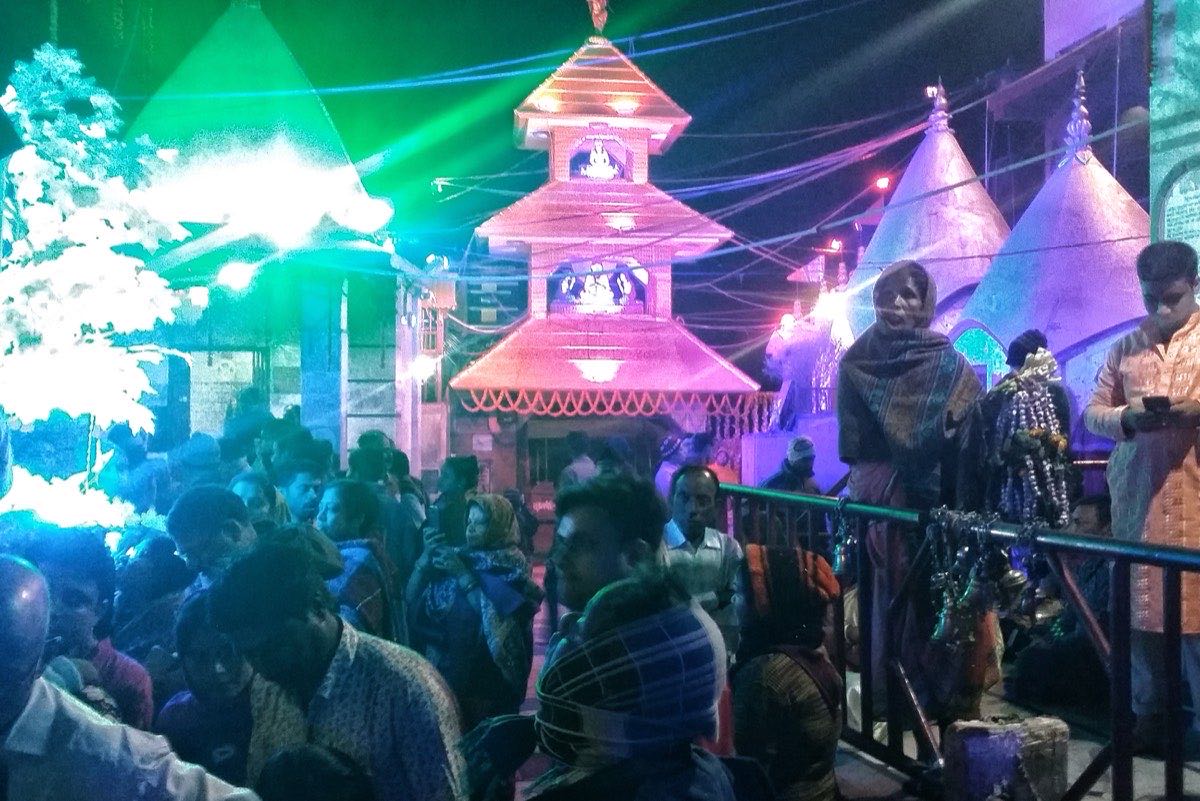
Tārāpīṭh (তারাপীঠ / तारापीठ) is a small temple town in the Rampurhat subdivision of Birbhum district, West Bengal, situated on the banks of the river Dwārikā (a tributary of the Brahmani). Despite its modest physical size, Tārāpīṭh holds an immense position in the spiritual geography of Hinduism — it is recognized simultaneously as a Shakti Pīṭha (a seat where a part of Goddess Satī’s body fell) and a Siddha Pīṭha (a site where Tāntric adepts have attained spiritual perfection). The temple enshrines Goddess Tārā, the second of the Daśa Mahāvidyā (Ten Great Wisdom Goddesses), worshipped here in her fierce yet profoundly compassionate form as a mother nursing the infant Śiva at her breast. For millions of Bengali Hindus, Tārāpīṭh is not merely a pilgrimage destination but the living heart of Śākta-Tāntric spiritual practice — a place where the veil between the mundane and the transcendent grows thin, and where the Goddess’s power is most directly accessible.
The Mythology of Tārā at Tārāpīṭh
Satī’s Third Eye
The origin of Tārāpīṭh as a Shakti Pīṭha follows the foundational myth of Satī’s self-immolation and the subsequent dismemberment of her body by Viṣṇu’s Sudarśana Cakra (as narrated in the Devī Bhāgavata Purāṇa 7.30 and the Kālikā Purāṇa). According to the tradition specific to Tārāpīṭh, it was the third eye (tṛtīya netra) or, in some versions, the eyeball (nayana-tārā) of Satī that fell at this location. The Sanskrit word tārā itself carries a rich polysemy: it means “star,” “the pupil of the eye,” “one who carries across” (from the root tṛ, “to cross”), and “savior” — all meanings that converge in the theology of the goddess worshipped here.
The Tantrasāra attributes the name to the belief that the spot where the “star” (tārā) of Satī’s eye fell became the sacred seat (pīṭha) of Goddess Tārā. Thus Tārāpīṭh literally means “the seat of Tārā.”
Tārā and the Infant Śiva
The most distinctive mythological narrative of Tārāpīṭh — and the one that defines its unique theological character — involves the relationship between Tārā and Śiva in the form of an infant. According to the temple tradition drawn from the Tārā Tantra and local oral narratives:
During the great cosmic event of the Samudra Manthana (Churning of the Ocean), when the deadly poison Hālāhala emerged and threatened to destroy all creation, Śiva swallowed the poison to save the universe. As the poison began to burn through his body, Śiva collapsed in agony. Seeing her consort in distress, Goddess Tārā assumed the form of a divine mother and transformed Śiva into an infant. She then placed the infant Śiva at her breast and nursed him with her divine milk, which neutralized the poison and saved his life.
This image of the divine mother nursing the infant god is the central theological icon of Tārāpīṭh. The temple’s primary mūrti (sacred image) depicts Tārā in precisely this form: a four-armed goddess, her complexion dark, seated on a white lotus, with the infant Śiva suckling at her left breast. Her upper hands hold a lotus and scissors, while her lower right hand displays the abhaya mudrā (gesture of fearlessness). This iconography makes Tārāpīṭh unique among Tāntric temples — here the fierce Mahāvidyā is worshipped not primarily in her terrifying aspect but as the supreme cosmic mother whose love transcends even the boundaries of divine hierarchy.
Tārā: The Second Mahāvidyā
Goddess Tārā occupies the second position in the hierarchy of the Daśa Mahāvidyā — the ten forms of transcendent feminine wisdom that constitute the highest theological framework of Śākta Tantra. While Kālī represents the absolute power of time and transformation, Tārā embodies the power of compassionate guidance — she is the one who “carries across” (tārayati) the ocean of worldly existence.
The Tārā Tantra describes her nature: “Tārā is she who liberates; Tārā is she who protects; Tārā is she who nourishes. In this world of suffering, she alone is the boat that carries the devotee to the far shore of liberation.”
In Hindu Tāntric iconography, Tārā is often depicted standing on a prostrate Śiva (echoing Kālī), but at Tārāpīṭh, her maternal, nourishing aspect predominates. This distinction is theologically significant: while Kālī at Dakṣiṇeśvar or Kālighaṭ represents the goddess in her world-dissolving power, Tārā at Tārāpīṭh represents the goddess as the sustainer, the nurturer, and the compassionate savior. Devotees often address her simply as “Mā Tārā” (Mother Tārā).
Bāmākhepā: The Mad Saint of Tārāpīṭh
No account of Tārāpīṭh is complete without the extraordinary figure of Bāmākhepā (বামাক্ষ্যাপা, c. 1837–1911), the eccentric Tāntric saint who is the most celebrated spiritual personality associated with the temple. Born Bāmācaran Caṭṭopādhyāy in the village of Āṭlā in Birbhum district, Bāmākhepā (“the mad devotee of the left hand”) lived at the śmaśāna (cremation ground) adjacent to the Tārā temple for most of his adult life.
Bāmākhepā’s spiritual practice (sādhanā) was characterized by extreme antinomian behavior that deliberately violated social norms — he wore minimal or no clothing, ate food from the cremation ground, consorted with outcasts, and behaved in ways that appeared insane to conventional society. Yet his devotees recognized in his madness the signs of divyonmāda (divine intoxication) — a state where the soul, overwhelmed by the direct experience of the goddess, can no longer conform to worldly conventions.
Numerous miracle accounts surround Bāmākhepā. He is said to have cured diseases, predicted future events, and manifested the goddess’s power in various ways. The most famous account describes how the temple’s mahanta (chief priest) once barred Bāmākhepā from the temple; that night, Goddess Tārā appeared to the mahanta in a dream and rebuked him: “You have driven away my most beloved child. He is dearer to me than all your rituals and offerings.” After this, Bāmākhepā was given unrestricted access to the temple.
Bāmākhepā’s samādhi (memorial shrine) stands within the temple complex and is itself a major pilgrimage attraction. For Bengali devotees, Bāmākhepā is not merely a historical saint but a living spiritual presence who continues to intercede with Mā Tārā on behalf of those who seek his blessings.
The Śmaśāna: The Cremation Ground as Sacred Space
One of Tārāpīṭh’s most distinctive features is the spiritual importance of its śmaśāna (cremation ground), which lies adjacent to the temple on the banks of the Dwārikā river. In mainstream Hindu tradition, cremation grounds are regarded as polluting and inauspicious places to be avoided. In the Śākta-Tāntric tradition, however, the śmaśāna is understood as one of the most powerful locations for spiritual practice — a place where the illusions of the material world are stripped bare, where the reality of death confronts the practitioner directly, and where the goddess’s transformative power is most intensely present.
The Mahānirvāṇa Tantra (14.120–125) describes the śmaśāna as the ideal site for Tāntric sādhanā: “The śmaśāna is the abode of Śiva and Śakti. Here the bonds of convention are severed, here fear is conquered, and here the sādhaka realizes the non-dual nature of existence.”
Tārāpīṭh’s cremation ground has been a site of continuous Tāntric practice for centuries. Even today, sādhakas and sādhvīs (male and female practitioners) can be found performing rituals, meditating among the funeral pyres, and pursuing the radical spiritual disciplines of the Kaulācāra tradition. Bāmākhepā himself attained his spiritual realization through years of practice in this very śmaśāna.
Temple Architecture and Worship
The Tārāpīṭh temple itself is architecturally modest compared to the grand stone temples of Odisha or Tamil Nadu. The present structure, rebuilt several times over the centuries, is a relatively small terracotta and brick temple in the traditional Bengali āṭ-cālā (eight-roofed) style, with a low dome over the sanctum. The temple’s spiritual power derives not from architectural grandeur but from the antiquity and intensity of the devotion practiced here.
The garbhagṛha (sanctum) contains two principal sacred objects:
- The metal image of Mā Tārā: A three-foot-tall four-armed image depicting the goddess nursing the infant Śiva, dressed in red silk and adorned with garlands, vermilion, and ornaments
- The stone slab (śilā): An ancient stone believed to be the original sacred object marking the site where Satī’s eye fell
Daily worship follows the Tāntric ritual tradition and includes the offering of red hibiscus flowers, sindūra (vermilion), red silk, animal sacrifice (particularly goats), and elaborate ārati ceremonies. The temple sees an especially large influx of devotees during Kālī Pūjā (Dīpāvalī in Bengal), Durgā Pūjā, Pauṣa Saṃkrānti, and the annual Mēlā (fair) of Tārāpīṭh.
Bengali Śākta Culture and Tārāpīṭh
Tārāpīṭh holds a special place in the Śākta spiritual geography of Bengal, which includes the great triangle of goddess temples: Kālighaṭ (Kolkata), Dakṣiṇeśvar (Kolkata), and Tārāpīṭh (Birbhum). While Kālighaṭ is the ancient Shakti Pīṭha of Kolkata and Dakṣiṇeśvar is hallowed by Rāmakṛṣṇa Paramahaṃsa, Tārāpīṭh occupies a unique position as the pre-eminent center of living Tāntric practice in Bengal.
The cultural significance of Tārāpīṭh extends far beyond formal temple worship. The site has inspired generations of Bengali poets, musicians, and artists. The Tārā Stava (Hymn to Tārā) attributed to various Tāntric masters, and the songs composed by Bāmākhepā himself, form part of Bengal’s rich tradition of devotional literature. The poet Ramprasad Sen (1718–1775), though primarily associated with Kālī worship, composed verses that reflect the broader Śākta sensibility that finds its most intense expression at Tārāpīṭh.
In everyday Bengali Hindu life, Tārāpīṭh is invoked as a place of last resort — when all other prayers and remedies have failed, devotees make the pilgrimage to Mā Tārā with the faith that the compassionate mother will not turn away any child who comes to her in genuine need.
Connections to Buddhist Tārā
The worship of Tārā at Tārāpīṭh has intriguing connections to the Buddhist Tārā tradition. In Mahāyāna and Vajrayāna Buddhism, Tārā is one of the most important bodhisattvas — the compassionate female savior who vows to rescue all sentient beings from suffering. Birbhum district was historically a stronghold of both Hindu Tāntrism and Buddhist Vajrayāna practice, and the Pāla dynasty (8th–12th centuries CE), which ruled Bengal and Bihar, patronized both traditions simultaneously.
Scholars such as Benoytosh Bhattacharyya and David Kinsley have noted that the Hindu and Buddhist Tārā traditions likely influenced each other significantly in Bengal. The compassionate, maternal aspect of Tārā emphasized at Tārāpīṭh — so different from the fierce, skull-garlanded forms of Kālī — may reflect this Buddhist influence, representing a synthesis of Hindu Śākta and Buddhist Vajrayāna soteriological ideals.
Contemporary Significance
Today, Tārāpīṭh receives an estimated one to two million pilgrims annually, with the majority coming from West Bengal, Jharkhand, Bihar, and Bangladesh. The temple town has grown considerably from its origins as a small riverside settlement, with numerous dharmaśālās (pilgrim rest houses), shops selling ritual supplies, and restaurants serving Bengali vegetarian and non-vegetarian cuisine.
For the Bengali Hindu community, Tārāpīṭh represents something that transcends conventional religious categorization — it is a place where the raw power of the divine feminine, the antinomian freedom of the Tāntric tradition, the motherly compassion of Tārā, and the mad devotion of Bāmākhepā converge into a unique spiritual experience that speaks to the deepest currents of Bengali religious consciousness.