Introduction: A Mountain of Granite for the Lord of Lords
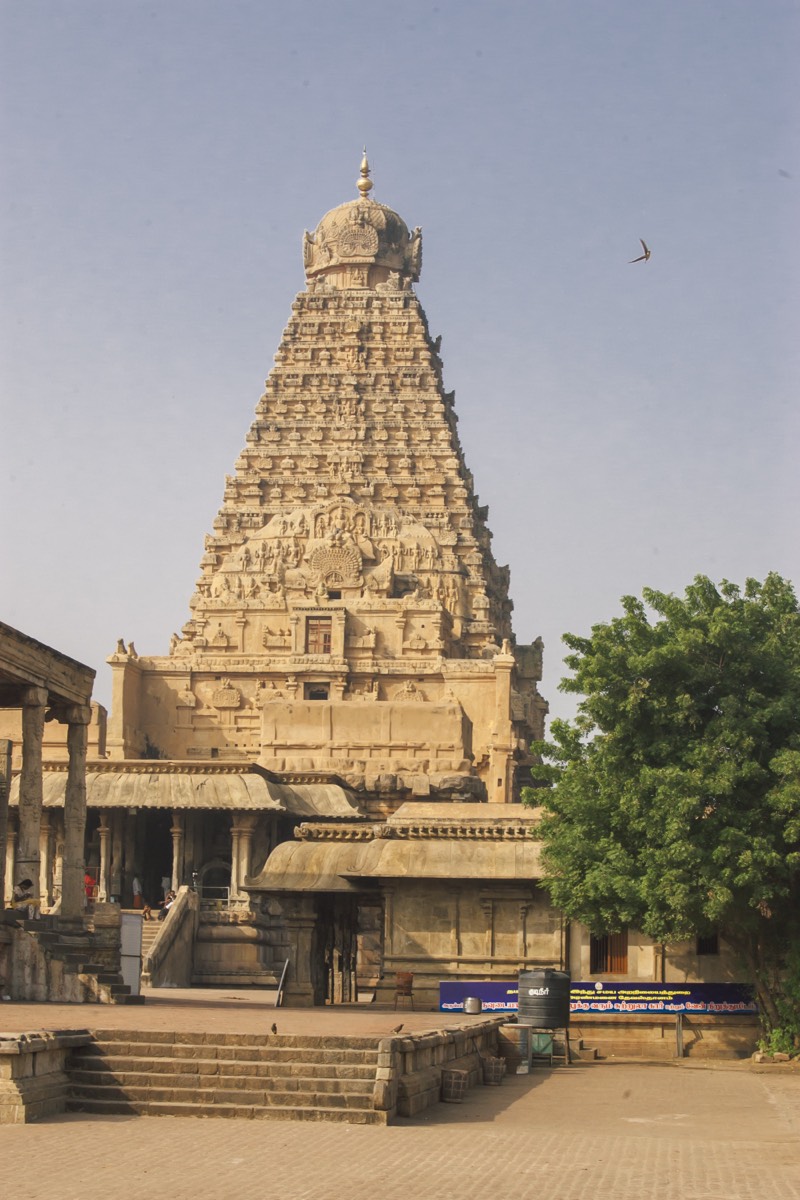
In the heart of Thanjavur — the imperial capital of the Chola dynasty — rises a temple that has defied a millennium of time, war, and weather. The Bṛhadīśvara Temple, known locally as Peruvuḍaiyār Kōvil (“the temple of the Great Lord”) and colloquially as Tañjai Periya Kōvil (“the Big Temple of Thanjavur”), is the crowning achievement of Chola architecture and one of the greatest religious buildings ever constructed in the Indian subcontinent. Built between 1003 and 1010 CE under the patronage of the Chola emperor Rājarāja I, the temple’s pyramidal vimāna soars to 216 feet (approximately 66 metres), making it one of the tallest temple towers in all of South Asia.
UNESCO designated the Bṛhadīśvara Temple as part of the “Great Living Chola Temples” World Heritage Site in 1987 (extended in 2004), recognizing that it “testifies to the brilliant achievements of the Chola in architecture, sculpture, painting, and bronze casting.” The word “living” in the designation is significant: unlike many ancient monuments that survive only as ruins, the Bṛhadīśvara Temple remains a fully active centre of worship, with daily pūjā ceremonies conducted continuously for over a thousand years.
The Builder: Rājarāja Chola I
Emperor of the Southern Seas
Rājarāja Chola I (r. 985-1014 CE), born Arulmoḻivarman, was among the most powerful rulers in Indian history. Under his reign, the Chola Empire expanded to encompass all of Tamil Nadu, Kerala, parts of Karnataka and Andhra Pradesh, northern Sri Lanka, and the Maldive Islands. His naval expeditions projected Chola power across the Bay of Bengal, and his administrative reforms established a sophisticated system of local governance that scholars continue to study.
The construction of the Bṛhadīśvara Temple was not merely an act of devotion but a statement of imperial sovereignty. Rājarāja named the temple “Rājarājeśvaram” — “the temple of the Lord of Rājarāja” — explicitly linking his royal identity with the divine authority of Śiva. In doing so, he followed a deeply rooted Tamil Śaiva tradition in which the king serves as the earthly representative of Śiva’s cosmic kingship, a concept elaborated in the Śaiva Āgamas and the hymns of the Nāyaṉmār saint-poets.
The Temple as Imperial Archive
The walls of the Bṛhadīśvara Temple bear 64 inscriptions of Rājarāja Chola I and 29 inscriptions of his son Rājendra Chola I, making the temple one of the most important epigraphic sources for the study of Chola history. A remarkable inscription from 1011 CE lists over 600 individuals who served the temple — priests, lamp-lighters, washermen, tailors, jewellers, potters, carpenters, dancers, singers, and musicians — providing an extraordinarily detailed picture of the temple’s social and economic ecosystem. These inscriptions also record the donation of gold, jewels, and agricultural lands to the temple, documenting the vast wealth that sustained Chola religious institutions.
Architecture: An Engineering Miracle in Granite
The Vimāna: Touching Heaven
The temple’s vimāna (sanctuary tower) is its most awe-inspiring feature. Rising to 216 feet in 13 progressively receding tiers (tālas), it is constructed entirely of granite — over 130,000 tons of it — without the use of mortar. The granite blocks are precisely cut and fitted together using an interlocking system that has maintained the structure’s integrity for over a millennium.
The most celebrated engineering mystery is the placement of the kūṭam (capstone), a single octagonal granite block weighing approximately 80 tons, at the very summit of the 216-foot tower. How the Chola engineers transported and raised this massive stone to such a height without modern machinery remains a subject of considerable debate. The prevailing scholarly theory suggests the use of an inclined ramp extending approximately 6 kilometres from the tower base, along which the capstone was gradually hauled using elephants, pulleys, and human labour. This ramp would have been dismantled after the capstone was placed.
The Shadowless Tower
One of the temple’s most remarkable qualities is the vimāna’s behaviour with respect to shadow. At noon during the equinoxes, the tower casts no shadow on the ground — a phenomenon achieved through precise calculation of the tower’s taper, the angles of its tiers, and its alignment relative to the sun’s path. This feat demonstrates the advanced knowledge of astronomy and geometry that Chola architects possessed, knowledge that was likely informed by the mathematical traditions recorded in texts such as the Sūrya Siddhānta and the works of Tamil mathematicians and astronomers.
The Temple Complex
The temple complex, spread over approximately 40 acres, includes:
-
The Garbhagṛha (Sanctum Sanctorum): Houses one of the largest Śiva Liṅgas in India, known as the Peruvuḍaiyār (“the Great Lord”). The Liṅga stands approximately 3.7 metres tall within a two-storey sanctum.
-
The Nandī Maṇḍapa: Contains a monolithic Nandī (sacred bull of Śiva) carved from a single block of granite, measuring approximately 4.9 metres long and 4 metres high. This imposing sculpture, positioned at the entrance to the main axis, is among the largest Nandī statues in India. The current structure housing the Nandī dates to the Nāyaka period (16th-17th century).
-
The Mahāmaṇḍapa (Great Hall): A large pillared hall preceding the sanctum, used for congregational worship and ritual ceremonies.
-
The Prākāra (Circumambulatory Corridor): A massive colonnaded corridor that encircles the main shrine, adorned with sculptural panels and providing space for devotees to perform pradakṣiṇa (ritual circumambulation).
-
Subsidiary Shrines: Dedicated to Gaṇeśa, Subrahmaṇya (Murugan), Devī (as Periya Nāyakī Ammaṉ), and the Navagrahas (nine planetary deities), these smaller shrines surround the main temple, representing the diverse theological ecosystem of Śaivism.
Chola Murals: Painting the Divine
The interior walls of the Bṛhadīśvara Temple preserve approximately 670 square metres of Chola-era fresco paintings — an extraordinarily rare survival of ancient Indian mural art. Discovered in the 20th century beneath layers of later Nāyaka-period paintings, these 11th-century murals depict:
- Scenes from the legends of the 63 Nāyaṉmār (Śaiva saints), drawn from the Periya Purāṇam
- Episodes from the life of Śiva, including the Naṭarāja (cosmic dance) and the Tripurāntaka (destruction of the three cities)
- Scenes of royal procession and courtly life
- Floral and geometric decorative motifs
The painting technique involves applying natural mineral pigments onto a thin lime plaster surface while it is still wet (a true fresco technique), resulting in vibrant colours that have survived for over a millennium. These murals represent the oldest known examples of the Chola painting tradition, which would later influence the development of Tanjore painting (Tañjāvūr oviyam), a classical South Indian art form that flourishes to this day.
Chola Bronze Masterpieces
The Bṛhadīśvara Temple was historically associated with an extraordinary collection of bronze processional images (utsava mūrtis) created through the lost-wax (cire perdue) casting technique. Chola bronzes — particularly the iconic Naṭarāja (Śiva as Lord of the Dance) — are recognized as among the finest metal sculptures ever produced in human civilization. While many of the original bronzes have been relocated to museums, the temple’s inscriptions record donations of numerous bronze images and provide detailed descriptions of the rituals in which they were used during festivals.
The Chola Naṭarāja, with Śiva dancing the ānanda tāṇḍava (dance of bliss) within a ring of cosmic fire (prabhāmaṇḍala), has become one of the most recognizable symbols of Indian art and was famously interpreted by the physicist Fritjof Capra as an allegory for the dance of subatomic particles.
Scriptural and Theological Foundations
Śaiva Āgamic Tradition
The Bṛhadīśvara Temple was built in accordance with the Śaiva Āgamas, the canonical texts that govern Śaiva temple construction, worship, and theology in South India. Specifically, the temple follows the prescriptions of the Kāmikāgama and the Kāraṇāgama, which detail the proportions of the vimāna, the placement of subsidiary shrines, the iconographic programme, and the ritual procedures. The daily worship at the temple continues to follow Āgamic protocols to this day.
The Nāyaṉmār Legacy
Tamil Śaivism was profoundly shaped by the 63 Nāyaṉmār, the saint-poets who wandered across Tamil Nadu between the 6th and 9th centuries, singing devotional hymns to Śiva. Their collective compositions, compiled as the Tēvāram and the Tiruvācakam, form the Tamil Śaiva canonical literature. Rājarāja Chola I played a crucial role in the revival and preservation of the Tēvāram: according to tradition, he recovered the lost hymns from within the walls of the Cidambaram Naṭarāja Temple, where they had been sealed and forgotten for centuries.
The Bṛhadīśvara Temple was designed to be a living embodiment of this devotional tradition. Its inscription prescribes the daily recitation of the Tēvāram hymns and the performance of classical music and dance as integral elements of temple worship — a practice known as ōtuvār pāḍal that continues today.
Major Festivals and Living Traditions
Mahāśivarātri
The Great Night of Śiva is celebrated with particular grandeur at the Bṛhadīśvara Temple. Thousands of devotees throng the vast prākāra for all-night worship, with special abhiṣeka (ritual bathing) of the Peruvuḍaiyār Liṅga and recitation of Śaiva hymns through the four watches of the night.
Ārudhrā Darśanam
This festival, celebrating Śiva’s cosmic dance (Naṭarāja), falls in the Tamil month of Mārgazhi (December-January) and is among the most important festivals at the temple. The processional bronzes are taken through the streets of Thanjavur in elaborate procession.
The Annual Consecration
The temple celebrates the anniversary of its founding with a multi-day festival that re-enacts the original kumbhābhiṣeka (consecration ceremony) performed by Rājarāja Chola I in 1010 CE, linking the present community of worshippers to the founding moment of the temple over a thousand years ago.
Cultural Legacy and National Significance
The Bṛhadīśvara Temple has exerted an immeasurable influence on the subsequent development of South Indian temple architecture. The two other temples that join it in the “Great Living Chola Temples” UNESCO designation — the Gaṅgaikoṇḍacōḻīśvaram Temple (built by Rājendra Chola I, circa 1035 CE) and the Airāvateśvara Temple at Dārāsuram (built by Rājarāja Chola II, circa 1166 CE) — directly follow the architectural principles established at Thanjavur while introducing their own innovations.
For the Tamil cultural consciousness, the Bṛhadīśvara Temple is more than a monument: it is a living affirmation of Tamil civilizational achievement. The temple demonstrates that over a thousand years ago, Tamil engineers, architects, sculptors, and painters operated at a level of technical and artistic sophistication that rivals any civilization in human history. The temple features prominently in Tamil literature, in the Bharatanāṭyam dance tradition, and in the broader cultural identity of Tamil Nadu.
Conclusion: The Mountain That Will Not Fall
A thousand years after Rājarāja Chola I laid its foundation, the Bṛhadīśvara Temple stands as unshaken as the day its 80-ton capstone was placed upon its summit. Its vimāna still rises to touch the sky. Its Liṅga still receives daily worship. Its inscriptions still speak in the voice of a king who declared his devotion to “the Lord of the Lords” in 130,000 tons of granite. In an age when most human constructions are measured in decades, the Bṛhadīśvara Temple measures its life in millennia — and shows no sign of yielding. As the Tēvāram declares: “In Tañjai, the Lord stands, the mountain of grace, unmoving and eternal.” The temple is that mountain.